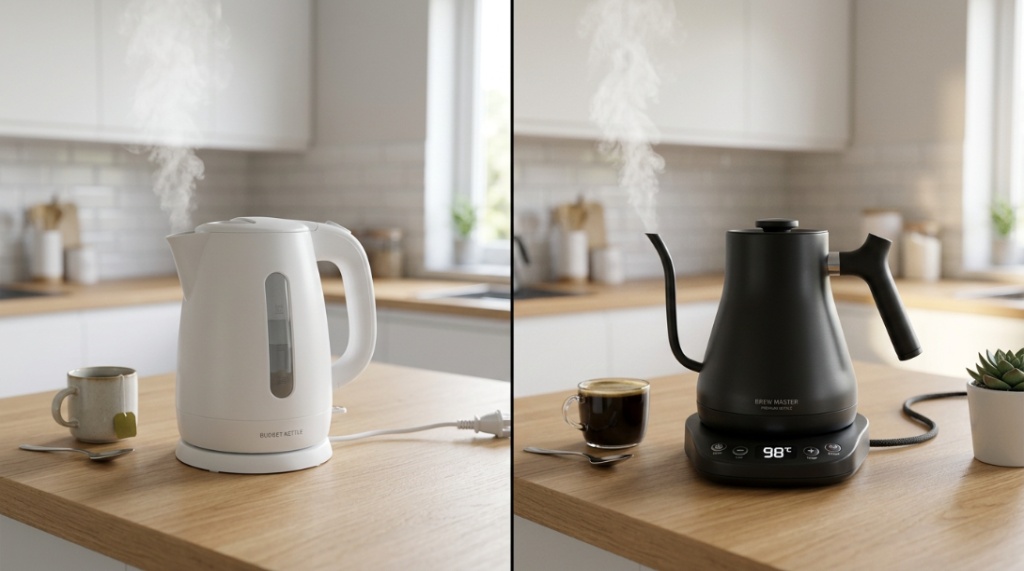
You stand in the aisle, staring at a kettle for $18 and another for $120. Your brain screams, “It just boils water!” Yet, you can’t shake the feeling that the cheap one might crack, rust, or pour water like a firehose. You aren’t alone. The problem isn’t finding a kettle; it’s finding one that doesn’t waste your money or your time. The truth is, you don’t need to spend a fortune to get a fantastic appliance. By identifying the right price floor for quality, you can buy an affordable electric kettle that heats fast, lasts years, and looks great on your counter without breaking the bank.
What Is a Realistic Budget for a Quality Electric Kettle?
You should spend between $25 and $50 for a reliable, high-performing electric kettle that will last several years without issues. This price bracket avoids the flimsy plastic models under $20 while sidestepping the premium designer models over $100 that offer little practical advantage for the average home.
When you set a budget in this range, you unlock key features like stainless steel construction, concealed heating elements, and auto shut-off. Kettles under $20 often use thin plastic that can warp or leach odors. Kettles over $80 often charge for aesthetics or smart features like Wi-Fi (do you really need your kettle to text you?). The sweet spot sits firmly in the middle, delivering exceptional value and performance.
Why Does the Price of Electric Kettles Vary So Much?
Price variation comes down to three core factors: materials, safety certifications, and heating speed. A $15 kettle saves money by using cheap plastics and a single-wall design, while a $60 kettle pays for 304-grade stainless steel, a robust thermostat, and better insulation. Understanding these differences helps you decide where your money actually matters.
Consider the following breakdown of where your money goes:
- Material quality: Stainless steel costs more than plastic but doesn’t flake or absorb flavors. Borosilicate glass kettles are mid-range and look beautiful but are fragile.
- Wattage: Higher wattage (1500W vs. 1000W) means faster boiling but requires better internal wiring, increasing cost.
- Base design: A 360-degree swivel base with a cordless lift adds manufacturing complexity versus a corded base.
- Safety features: Premium kettles include boil-dry protection, cool-touch handles, and double-wall insulation, all of which add to the price tag.
Which Features Justify Spending More Than $40?
Spending over $40 is justified when the kettle offers temperature control, variable hold settings, or double-wall insulation that keeps water hot for longer. For most people, a standard boil-and-pour model works perfectly. However, tea enthusiasts and pour-over coffee lovers benefit immensely from these advanced features.
If you regularly brew green tea (needs 175°F) or French press coffee (needs 195°F), a variable temperature kettle is a game-changer. You don’t need to guess or use a thermometer. These models typically cost between $50 and $80. You should also look for a “keep warm” function. This feature maintains your selected temperature for up to 60 minutes, which is incredibly useful for multiple cups of tea throughout the morning.
Stainless Steel vs. Glass vs. Plastic
| Material | Price Range | Pros | Cons |
|---|---|---|---|
| Stainless Steel | $25 – $80 | Durable, non-reactive, retains heat | Heavier, can feel hot on the outside |
| Borosilicate Glass | $30 – $60 | Beautiful, see water level, neutral taste | Fragile, can crack with thermal shock |
| Plastic | $12 – $25 | Lightweight, cheap, cool to touch | Can warp, may absorb odors, environmental concerns |
How Much Should You Spend for Speed and Efficiency?
You should spend at least $25 to get a kettle with a 1500-watt heating element, which boils a full liter of water in under three minutes. This is the standard for efficiency. Cheaper kettles often use lower wattage (1000-1200W) or poorly designed bases that take significantly longer.
Time is money, literally. If you boil water twice a day, waiting an extra 90 seconds each time adds up to over 18 hours of wasted time per year. A high-wattage kettle pays for itself in convenience. Look for kettles that specify “rapid boil” or “1500W” in the product description. Avoid anything under 1200W if speed matters to you.
Can You Trust a Cheap Electric Kettle?
Yes, you can trust a cheap electric kettle as long as it is UL, ETL, or CSA certified. These safety certifications indicate the product has passed rigorous testing for electrical safety and material safety. Without these marks, a cheap kettle could pose a fire hazard or leach chemicals into your water.
Here are the safety certifications to look for:
- UL (Underwriters Laboratories): Common in North America. Indicates rigorous electrical safety testing.
- ETL (Intertek): Equivalent to UL. Often found on imported but reputable brands.
- CSA (Canadian Standards Association): Required for Canada, also accepted in the US.
- CE (Conformité Européenne): Seen on imported kettles; quality varies widely.
A $20 kettle with a “CE” mark from an unknown brand is riskier than a $30 kettle with a UL mark. Never sacrifice safety to save ten dollars.
When Is It Worth Spending Over $100?
It is only worth spending over $100 if you need a gooseneck spout for precision pouring (like for pour-over coffee) or a smart kettle with Wi-Fi connectivity. For standard hot beverages and cooking, a $100+ kettle is overkill. The law of diminishing returns hits hard above the $60 price point.
Premium kettles often include features like:
- Gooseneck spouts: Essential for controlled flow when making pour-over coffee. Standard kettles splash.
- Smartphone control: Allows you to turn on the kettle from bed. A luxury, not a necessity.
- Professional-grade materials: Surgical steel or copper interiors that look stunning but perform identically to good stainless steel.
Unless you are a serious coffee hobbyist or love gadgetry, save your money. A $45 variable temperature kettle will serve you just as well as a $150 one for basic tea and coffee.
How to Choose the Best Affordable Electric Kettle
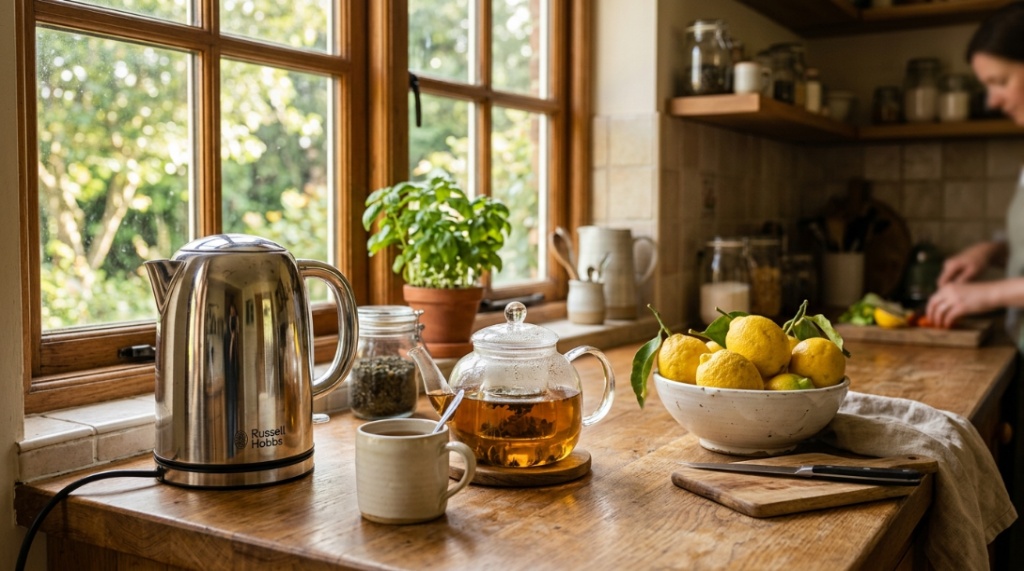
To choose the best affordable electric kettle, you must balance wattage, material, and capacity against your specific daily habits. Start by asking three questions: How much water do I boil? How fast do I need it? Do I need different temperatures?
Follow this simple decision framework:
- For 1-2 people (tea/coffee): Get a 1.0L to 1.5L cordless stainless steel kettle for $25-$35.
- For families (cooking/pasta): Get a 1.7L stainless steel model for $30-$45.
- For tea enthusiasts: Get a variable temperature stainless steel model for $50-$70.
- For pour-over coffee lovers: Get a gooseneck variable temperature model for $60-$90.
What Is the Lifespan of a Budget Electric Kettle?
A budget electric kettle in the $25 to $50 range should last between 3 to 5 years with regular use. The most common failure points are the switch, the heating element, and the handle. Spending slightly more on a well-reviewed brand with a good warranty extends this lifespan significantly.
To maximize the life of your kettle:
- Descale regularly: Hard water causes mineral buildup that damages the heating element. Use vinegar or citric acid once a month.
- Avoid overfilling: Always stay below the max line. Boiling water can overflow into the electrical base.
- Keep the base dry: Never place a wet kettle on the base. Water can short-circuit the connectors.
- Store properly: Don’t leave water sitting in the kettle for days. This encourages rust and bacteria growth.
Is a Variable Temperature Kettle Worth the Extra Cost?
Yes, a variable temperature kettle is worth the extra cost if you drink green tea, white tea, or specialty coffee. These beverages require specific water temperatures below boiling to extract the best flavor. Boiling water can actually ruin green tea by releasing bitter tannins. A variable temperature kettle solves this precisely.
If you only drink black tea, instant coffee, or use the kettle for cooking water, a standard model is perfectly sufficient. Black tea is robust and benefits from fully boiling water (212°F). In this scenario, spending extra for temperature settings is a waste. Match the feature to your actual drinking habits, not the hype.
Which Brands Offer the Best Value Under $50?
Brands like Hamilton Beach, Cuisinart, and OXO offer the best balance of quality, safety, and price under $50. These companies have established supply chains and customer service networks, which means fewer defective units and easier replacements. Generic “no-name” brands can be tempting, but their quality control is often inconsistent.
Look for these specific traits in a brand:
- Warranty: A 1-year or 2-year warranty is a sign of confidence.
- Availability: Brands sold at major retailers (Amazon, Target, Walmart) are easier to return.
- Reviews: Look for over 1,000 reviews with a 4.0+ star rating. Watch for consistent complaints about leaking or rust.
Avoid brands that only sell through secondary marketplaces or social media ads. While tempting, these often lack safety certifications and reliable customer support.
While investing in a premium kettle upgrades your morning brew, prioritizing the right appliances and techniques is key for a great dinner, too. For instance, you can easily cook bone-in turkey breast in oven for juicy results if you master temperature control across all your cooking.
How to Avoid Common Mistakes When Buying a Cheap Kettle
Avoid buying a kettle with a plastic inner lid, exposed heating elements, or a narrow opening. These three mistakes are the most common regret among budget buyers and directly impact the usability and safety of the kettle.
Here is what to look for at a glance:
- Mistake 1: Plastic lid. Fix: Choose a kettle with a stainless steel inner lid. Plastic lids can crack and trap odors.
- Mistake 2: Exposed coil. Fix: Look for a “concealed element” base. Exposed coils collect limescale and are harder to clean.
- Mistake 3: No water window. Fix: Ensure the kettle has a clear water level indicator so you don’t overfill.
- Mistake 4: Narrow spout opening. Fix: Choose a wide mouth (3-4 inches) for easy cleaning and descaling.
Conclusion
You do not need to spend a hundred dollars to get a fantastic electric kettle. The ideal budget for most households sits firmly between $25 and $50. Within this range, you can find a durable stainless steel model with a UL certification, a 1500W heating element, and a concealed coil that will serve you reliably for years. Focus on material quality over fancy features. Prioritize safety certifications over brand hype. If you need variable temperatures or a gooseneck spout, you can safely stretch your budget to $60 or $70, but anything beyond that is strictly luxury. Your perfect kettle is waiting, and it doesn’t cost a fortune. Start your search today with confidence, knowing exactly what to look for and how much to spend.
Frequently Asked Questions
Is it safe to buy the cheapest electric kettle?
Yes, but only if it carries a recognized safety certification like UL, ETL, or CSA. Without these marks, cheap kettles may use substandard materials that could leach chemicals or pose electrical hazards.
How long does an electric kettle last?
A quality affordable electric kettle typically lasts 3 to 5 years. Proper maintenance like regular descaling and avoiding overfilling can extend this lifespan to 6 years or more.
Are glass kettles better than stainless steel?
Glass kettles are better if you want to see the boiling action and are careful with fragile items. Stainless steel is better for durability, heat retention, and overall longevity. Glass kettles can crack from thermal shock.
Can I use an electric kettle for cooking?
Yes, electric kettles are excellent for quickly boiling water for pasta, rice, oatmeal, or blanching vegetables. However, do not cook food directly inside the kettle. Only use it for boiling water.
What wattage is best for an electric kettle?
1500 watts is the standard for fast boiling in most households. This wattage boils a liter of water in about 2.5 to 3 minutes. Kettles below 1200 watts will be noticeably slower.
Do expensive kettles boil water faster?
Not necessarily. Most kettles in the $25 to $100 range all use 1500W elements. The speed is nearly identical. Expensive kettles offer temperature control or better materials, not faster boiling.
How do I clean limescale from my electric kettle?
Fill the kettle halfway with equal parts water and white vinegar. Boil the mixture, let it sit for 15 minutes, then rinse thoroughly. Repeat monthly if you have hard water. Citric acid powder works even better.