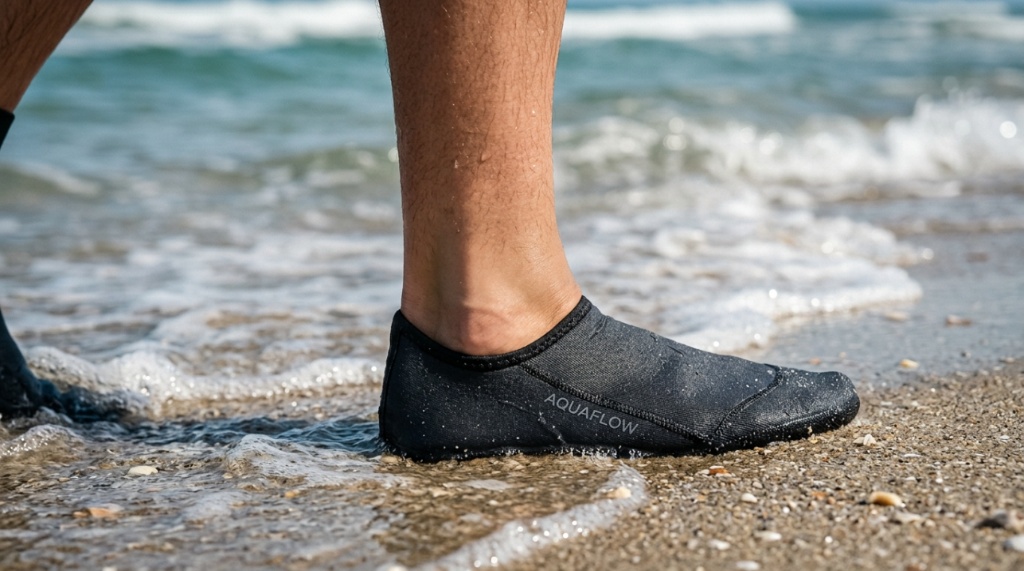
You finally get to the shoreline, slip on your water socks, and wade into the surf—only to feel them start sliding down your heel as the sand shifts beneath your feet. Few things ruin a perfect beach day faster than constantly stopping to yank up a sagging sock. You need gear that stays put, grips the wet rocks, and moves with you, not against you.
This guide cuts through the marketing hype and gives you a practical, step-by-step approach to selecting water socks that actually stay on your feet. You will learn exactly what features prevent slipping, how to get the right fit every time, and what materials offer the best grip.
What Makes a Water Sock Slip Off in the First Place?
Water socks slide off for three main reasons: poor fit, inadequate cuff design, and slick interior materials. When your foot moves inside the sock, friction against the cuff works to pull the sock down. Sand and water reduce that friction even further.
The most common cause is buying socks that are too large or too narrow through the heel pocket. A sock that does not lock onto your Achilles tendon has nothing to grip, so every step creates a pumping action that drives the sock downward. Additionally, cheap socks often use smooth polyester linings that feel nice against the skin but offer zero grip when wet. Look for socks with a contoured heel cup and a textured or neoprene-lined interior to prevent this sliding effect.
Signs Your Current Socks Will Fail
- You can fit more than one finger between your heel and the back of the sock
- The cuff leaves red marks or feels loose immediately
- You feel the sock shift forward when you point your toes
- The sock bunches under your arch after walking ten feet in water
How Should Water Socks Fit to Stay On?
Water socks should fit like a second skin—snug everywhere without any bunching or loose fabric. You should not be able to pinch more than a quarter-inch of material anywhere on the sock, especially around the heel and ankle.
Start by measuring your foot length and width while standing. Compare those measurements to the brand’s specific size chart, never assume sizing transfers between manufacturers. When you try them on, wear them in shallow water for a few minutes. A proper fit feels secure but not compressive. The ideal test: walk ten steps backward in wet sand. If the sock does not shift, the fit is correct.
Step-by-Step Fit Check
- Put the socks on dry feet first.
- Check for excessive room at the toe box—no more than a thumbnail’s width beyond your longest toe.
- Press your finger into the heel pocket. There should be zero gap.
- Walk on a hard, wet surface. The sock should not slide at the heel.
- Submerge them fully in water and repeat the walk test.
Which Materials Prevent Slipping on Wet Surfaces?
Rubber and high-density neoprene offer the best anti-slip performance on wet, slick surfaces. Look for a sole made from natural rubber or thermoplastic rubber (TPR) with a multi-directional tread pattern.
The upper material matters just as much. Nylon-spandex blends dry fast and offer four-way stretch, but they lack grip against the skin. A better choice is a sock with a neoprene cuff or an internal silicone grip strip at the heel. Neoprene provides natural friction against wet skin, helping the sock stay anchored. For the sole, avoid smooth gum rubber. Instead, choose deep lug patterns or hexagonal treads that channel water away and create suction on rocks and boat decks.
Can You Wear Regular Socks Instead of Water Socks?
No, regular socks fail completely in water. Cotton socks become heavy, stretch out, and lose all elasticity when wet. Synthetic athletic socks slip even faster because their smooth fibers offer no grip against the skin.
Regular socks also lack the protective sole that water socks provide. Sharp shells, hot sand, and jagged rocks can penetrate thin fabric. Water socks are purpose-built with reinforced rubber soles and drainage materials that keep your feet safe. Beyond safety, regular socks disintegrate quickly in saltwater and chlorine, making them a waste of money. Invest in proper gear or go barefoot—but do not expect standard socks to perform.
What Features to Look for in Anti-Slip Water Socks
A good anti-slip water sock combines a secure closure, textured sole, and moisture-wicking interior in one cohesive design. Each feature works together to eliminate movement.
| Feature | Why It Matters |
|---|---|
| Contoured heel cup | Locks the heel in place, preventing vertical slip |
| Adjustable ankle strap or drawcord | Tightens the cuff to match your ankle shape |
| Rubber toe cap | Protects toes and adds grip when pointing |
| Drainage holes or mesh panels | Release trapped water so sock does not balloon |
| Flatlock stitching | Reduces friction points that cause blisters |
Prioritize socks that have at least three of these features. The combination of a heel lock and an adjustable cuff makes the biggest difference in staying power.
Which Tread Pattern Offers the Best Grip?
Multi-directional lug patterns provide the most grip on unpredictable surfaces like wet rocks, sandy slopes, and boat ramps. These patterns feature small rubber blocks arranged in opposing directions so you get traction whether you are moving forward, backward, or sideways.
Hexagonal patterns are excellent for flat, smooth surfaces like pool bottoms and boat decks. They create hundreds of tiny suction cups that grip wet fiberglass. For rocky shorelines, zigzag or chevron patterns channel sand and debris out from under your foot, maintaining contact with the surface. Avoid socks with a completely flat rubber sole. They offer almost no grip on wet surfaces and become dangerously slippery on algae-covered rocks.
Tread Recommendations by Activity
- Snorkeling on coral reefs: 3mm to 5mm lugs with plenty of spacing to release sand
- Stand-up paddleboarding: Fine hexagonal pattern for smooth decks
- Rocky shore fishing: Aggressive chevron lugs for uneven terrain
- Pool and water aerobics: Moderate flat tread with water channels
How to Test Water Socks for Slip Resistance Before Buying
You can test slip resistance without even putting them in water. Place the sock on a smooth, dry floor and push it forward with your palm. A good sole will resist sliding with noticeable friction. Then wet the sole and repeat the test. If the sock glides easily, it will not perform on wet surfaces.
Once you own them, do a quick wet-floor test at home. Step into your shower or onto a wet tile floor. Lift your other foot and try to shift your weight. The sock should hold firm without micro-sliding. If you feel even slight motion underfoot, the tread pattern is not aggressive enough for your needs. Return them before wearing them in a real environment.

Are Adjustable Straps or Drawcords Worth It?
Yes, adjustable closure systems dramatically improve a water sock’s staying power. A simple cinch cord or hook-and-loop strap around the ankle lets you fine-tune the fit after your foot is wet and slightly expanded.
Without an adjustable system, you rely entirely on the sock’s elastic cuff. That elasticity degrades over time, especially in saltwater and chlorine. An adjustable strap compensates for material fatigue and lets you achieve a tighter fit when you need it most. Drawcords are lighter and less bulky, while straps offer more precise adjustments. Choose based on your activity—drawcords work well for snorkeling and swimming, while straps are better for surfing or kayaking, where rapid foot movement occurs.
Finding outdoor gear that fits perfectly is the key to a great adventure, whether you’re securing your footwear for the ocean or gearing up for the trails. If you are also shopping for the riders in your life, check out our guide on Cycling Gifts for Men Who Love Mountain Biking to find high-traction gear built for rugged terrain.
How to Maintain Anti-Slip Properties Over Time
Rinse your water socks in fresh, cool water immediately after every use. Salt crystals and sand grains embed themselves in the rubber sole and break down the tread pattern’s sharp edges. Without rinsing, the rubber becomes smooth within weeks.
Dry them in the shade, never in direct sunlight or on a heater. UV rays and high heat degrade rubber compounds, turning them brittle and slick. Once fully dry, store them flat or rolled loosely. Cramming damp socks into a tight ball distorts the heel pocket and ruins the fit. With proper care, quality water socks maintain their grip for two to three seasons. Replace them the moment you notice the tread wearing smooth or the cuff losing elasticity.
Care Routine Checklist
- Rinse inside and out with fresh water after each use.
- Hand wash with mild soap once a month to remove salt buildup.
- Squeeze out excess water—do not wring.
- Air dry flat in a shaded, ventilated area.
- Store away from direct sunlight and heat sources.
When Should You Replace Your Water Socks?
Replace your water socks when you notice any of these warning signs: the sole becomes smooth to the touch, the heel cup no longer holds its shape, or the cuff stretches out faster than you can tighten it. Also replace them if you see any tears, holes, or separation between the sole and upper fabric.
How often depends on usage frequency. Someone snorkeling twice a month might get two years. Someone surfing every weekend may need new socks every six months. A good rule of thumb: if you find yourself adjusting your socks more than once every thirty minutes of activity, they are done. Worn socks not only slip off, they also offer almost zero protection against cuts and stings.
That is exactly why finding reliable beach water socks anti slip water socks matters. The right pair keeps you safe, comfortable, and focused on enjoying the water instead of fiddling with your footwear.
Is a Higher Price Always Better for Preventing Slipping?
No, price does not directly correlate with anti-slip performance. You can find inexpensive socks that stay put thanks to smart design choices like deep lugs and neoprene cuffs. Conversely, some expensive socks prioritize comfort and style over grip.
The key is to evaluate the construction quality, not the price tag. Look at the sole thickness, tread depth, and how the heel pocket is shaped. A well-constructed sock in the $15 to $25 range often outperforms a $40 fashion-oriented sock. Read user reviews specifically about slipping, not just overall satisfaction. Pay attention to comments from people who use them for the same activities you plan to do.
Frequently Asked Questions
Can I machine wash my water socks?
Hand washing is safer and preserves the rubber sole and elastic cuffs longer. If you must use a machine, place them in a mesh laundry bag, use cold water with a gentle cycle, and never use bleach or fabric softener.
Do water socks work on hot sand?
Yes, but only if they have a thick enough rubber sole. Look for a sole thickness of at least 3mm. Thinner socks will not insulate your feet from scorching sand and can become uncomfortably hot.
Can I wear water socks with fins?
Yes, many divers use water socks under fins to prevent blisters. Choose a thinner sock (1.5mm to 2mm) so your fins fit properly without becoming too tight. Thicker socks can cause cramping inside fin pockets.
How do I know my size if I am between sizes?
Always size down when between sizes. Water socks stretch slightly with use and when wet. A slightly snug sock that fits like a second skin will hold better than a loose one that slides. Only size up if the sock has zero give in the toe box.
Do anti-slip water socks work on slippery boat decks?
Yes, if the sole uses a fine hexagonal or multi-directional tread pattern designed for smooth, wet surfaces. Avoid deep lugs on boats, as they can catch on deck cracks or hardware and cause tripping.
Conclusion
Choosing beach water socks that won’t slip off comes down to three things: a precise fit, a textured rubber sole, and an adjustable closure system. Get these elements right, and you eliminate the frustration of constantly pulling up your socks. Prioritize a contoured heel pocket and a sole with aggressive tread over brand names or flashy colors. Measure your feet properly, test the socks wet, and care for them with fresh water after every trip. Your feet deserve gear that stays put so you can focus on the surf, not your socks. Use this guide as your checklist the next time you shop, and you will walk away with a pair that keeps you steady from the shoreline to the deep end.