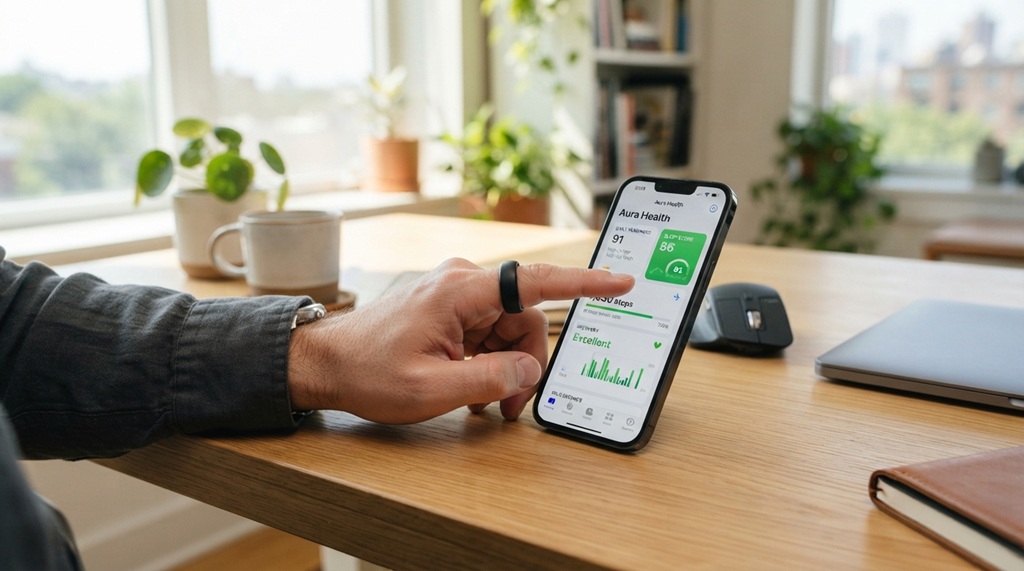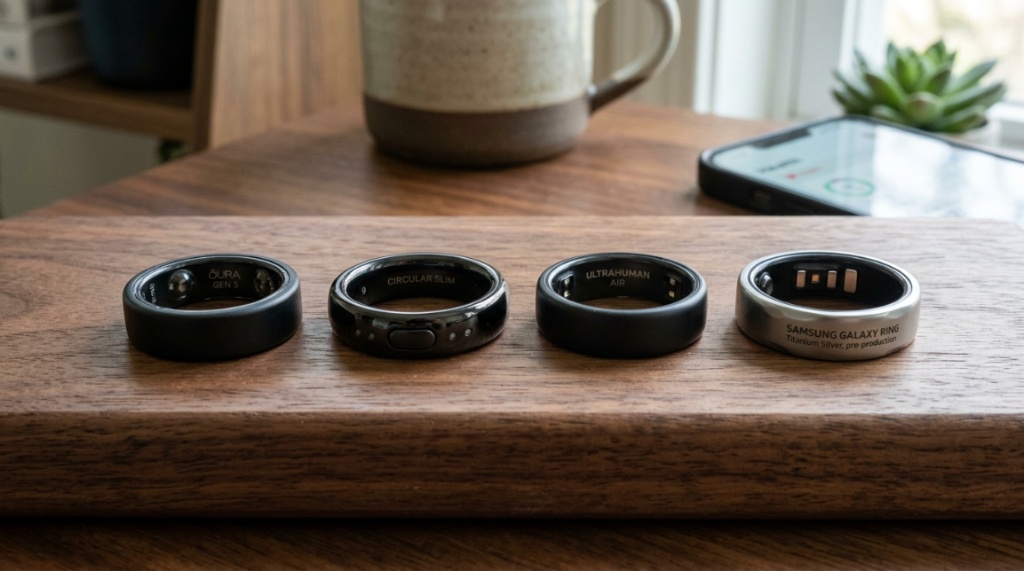
Fitness rings have become a popular alternative to bulky wristbands and smartwatches. They offer a discreet way to track your activity, sleep, and heart health without drawing attention to your wrist. But the market is growing quickly, and that makes choosing the right one surprisingly tricky. You might be weighing the benefits of a sleek design against a longer battery life or wondering whether advanced sensors actually justify a higher price. That’s why it helps to have a clear, practical method to compare fitness ring features without getting lost in marketing hype. This guide breaks down the key decision points—especially features and battery life—so you can pick the ring that genuinely fits your lifestyle and budget.
Key Takeaways
- Focus on battery life first because it affects daily usability more than any other spec, but remember that longer battery life often means a thicker ring.
- Don’t pay extra for advanced health sensors like ECG or skin temperature if you only need basic step counting and sleep tracking.
- Consider your phone’s operating system before comparing rings; many rings are deeply integrated with iOS or Android but not both.
- Check the sizing policy carefully—most rings require a physical sizing kit, and getting the fit wrong can ruin the accuracy of your data.
Why Battery Life Is the Most Critical Feature
Battery life is the first thing you should evaluate when you compare fitness rings features, because it determines whether the ring becomes a helpful habit or a frustrating gadget. A ring that needs daily charging can feel more like a chore than a health tool. Most users prefer a ring that lasts at least four to five days, but many models advertise seven days or more. The trade-off is that a bigger battery typically makes the ring bulkier and less comfortable for all-day wear, especially during sleep.
You also need to think about how the ring charges. Some use a proprietary USB dock, while others use a small dongle or a magnetic cable. If you travel frequently, a portable charging case can be more convenient than carrying a dedicated dock. Pay attention to charging speed too. A ring that takes two hours to reach a full charge is much easier to top up than one that takes four hours overnight.
Real-World Battery Scenarios
Consider your actual routine. If you exercise three times a week and use sleep tracking every night, you’ll need a ring that can get through a full week on a single charge. If you’re a daily runner who also streams audio to wireless headphones from your phone, the ring’s battery may drain slightly faster due to continuous heart-rate monitoring and Bluetooth data sync. Some rings also have an “always-on” display mode that cuts battery life by half, so deciding whether you need that feature is essential.
Essential Fitness Tracking Features to Evaluate
Battery life matters only if the ring actually tracks what you care about. Most fitness rings measure steps, distance, calories burned, and sleep stages. But the real differences lie in the advanced sensors and how the data is interpreted. For a broader perspective on regional availability and specialized models, check out our guide on how to select the top fitness tracker ring in WA.
Heart Rate and Heart Rate Variability (HRV)
All fitness rings have an optical heart-rate sensor, but accuracy varies. HRV data is particularly useful for tracking recovery and stress, but not every ring calculates it in a meaningful way. Look for rings that display HRV trends rather than just raw numbers, because the trend over several weeks matters more than a single daily reading.
Sleep Tracking and Recovery Scores
One of the main reasons people buy a fitness ring is to monitor sleep. The ring’s small size makes it more comfortable to wear to bed than a smartwatch. however, the quality of sleep-stage tracking (light, deep, REM) varies by brand. Some rings provide a simple “sleep score” that combines duration, quality, and consistency, while others offer detailed graphs with guidance on improving sleep habits. If you have specific sleep concerns, look for a ring that lets you export raw sleep data for your doctor or a sleep specialist.
Activity Goal Flexibility
Not everyone needs a daily step goal of 10,000. The best fitness rings let you customize activity targets—steps, active calories, or workout minutes—based on your level. Some rings automatically detect common exercises like walking, running, and cycling, but very few recognize gym-based strength training accurately. If you primarily lift weights, a ring that can tag manual workouts manually is often better than one that insists on auto-detecting everything.
Design, Durability, and Wearability
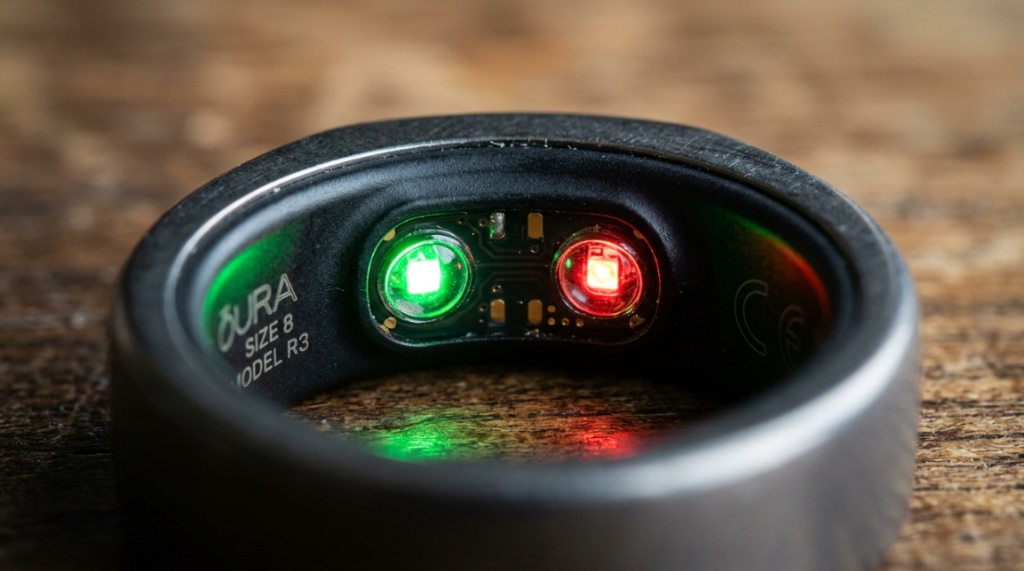
The ring’s design directly impacts battery life and sensor accuracy. Most fitness rings are made from titanium, which is lightweight, strong, and less likely to cause skin irritation. However, titanium comes in both matte and glossy finishes, and the glossy ones tend to show scratches more easily. If you work with your hands, a matte finish or a scratch-resistant coating is a smarter choice.
Sizing and Fit
A proper fit is non-negotiable. If the ring is too loose, the optical sensors won’t maintain proper skin contact, leading to inaccurate heart-rate and sleep data. If it’s too tight, you may feel discomfort or even see skin irritation, especially during workouts. Most manufacturers offer a free sizing kit with plastic or dummy rings that you wear for a few days before ordering the actual ring. This step is worth the extra time.
Water Resistance and Everyday Use
Don’t assume that a ring advertised as “water-resistant” is safe for swimming. Check the specific ATM (atmosphere) rating. For instance, a ring rated 5 ATM can be worn while swimming or in the rain, but 3 ATM might only be safe for splashes and hand washing. If you swim regularly, choose a ring with at least 5 ATM, and check if it has a specific swim-tracking mode that counts laps and strokes.
Comparing Sensors: What’s Actually Useful?
As you compare fitness rings features, you’ll encounter sensors like SpO2 (blood oxygen), skin temperature, and even ECG (electrocardiogram). These sound impressive, but they add cost and battery drain. SpO2 monitoring can be helpful for high-altitude training or detecting potential breathing issues during sleep, but it’s not a medical-grade diagnostic tool. Skin temperature tracking is more useful for spotting trends, such as the early signs of illness, than for everyday fitness decisions. ECG functionality is available on only the most expensive rings and requires pairing with a companion smartphone app to produce a downloadable PDF for your doctor.
Before paying a premium for these sensors, ask yourself whether you’ll actually act on the data. A ring that tracks steps and sleep accurately is far more valuable than a ring with a skin-temperature sensor that you might check only when feeling unwell.
Battery Life vs. Features: A Practical Trade-Off Table
To help you see the relationship between battery life, size, and features, here’s a comparison table based on typical market offerings. Keep in mind that actual specs vary by brand, so check the specific model’s datasheet before buying.
| Feature Set | Typical Battery Life | Ring Thickness | Best For |
|---|---|---|---|
| Basic (steps, sleep, HR) | 5–7 days | Slim | Everyday wear, sleep tracking |
| Intermediate (adds SpO2, workout modes) | 3–5 days | Moderate | Runners, gym-goers |
| Advanced (adds ECG, skin temp, GPS) | 2–3 days | Bulkier | Data enthusiasts, tech tinkerers |
The table shows a clear pattern: the more advanced the sensor package, the shorter the battery life. If you prioritize long battery life, look for a ring that is intentionally minimalist with a simple sensor architecture.
Software and Companion App Quality
Hardware specs are useless if the app interface is clunky. The ring’s companion app is where you’ll interpret your data, set goals, and identify trends. Pay attention to these specific points:
- Data export: Can you download your data in CSV or PDF format? This matters if you want to share reports with a doctor or trainer.
- Integration: Does it sync with Apple Health, Google Fit, or Strava? Native integration reduces friction, whereas third-party sync often lags or loses data.
- Subscription fees: Some rings hide advanced analytics—like detailed sleep staging or long-term HRV trends—behind a monthly or annual subscription. Calculate the total cost over two years before you commit.
- Notification system: Unlike smartwatches, fitness rings usually lack a screen for reading messages. Instead, they use subtle vibrations or tiny LED dots. Decide whether you actually want on-wrist notifications or if you’d rather keep your phone nearby.
Common Mistakes When Comparing Fitness Rings
Even experienced gadget buyers make these errors:
- Ignoring sizing costs: If you choose the wrong size, returning a standard-size ring is often easier than returning a custom-sized one that was manufactured after your order.
- Focusing on sensor count, not accuracy: A ring with six sensors might have an inaccurate step counter. Read independent reviews that compare the ring against a medical-grade chest strap, for example, before trusting marketing claims.
- Forgetting about skin sensitivity: The sensors emit light continuously, and some users develop a rash or contact dermatitis from the materials or the light itself. If you have sensitive skin, choose a ring with a hypoallergenic coating and try it for at least a full week.
- Assuming all rings work with all phones: Some rings are iOS-only or Android-only. Always verify compatibility with your smartphone’s operating system and Bluetooth version.
How to Choose Between a Fitness Ring and a Smartwatch
If you’re torn between a ring and a smartwatch, clarify your priorities. A ring is better for continuous sleep tracking because it’s comfortable, and it quietly tracks all-day activity without vast notifications. A smartwatch is better if you want a built-in GPS for phone-free runs, a screen for reading messages, and the ability to control music directly from your wrist. Typically, anyone who prioritizes battery life and minimal distraction prefers a ring. If you need to replace your smartwatch entirely, a ring may not be enough on its own—you might still want your phone nearby for maps or contactless payments.
Frequently Asked Questions
Can fitness rings be worn while lifting weights or doing gym workouts?
Yes, but with caution. The ring may compress against the finger during gripping movements, causing discomfort or inaccurate heart-rate readings. Wear it on your non-dominant hand and might consider removing it for heavy lifting sets.
How long does a fitness ring typically last before needing a replacement?
The battery degrades over time, similar to any rechargeable device. Expect a useful life of about three to five years before battery capacity noticeably drops. The ring’s titanium shell is durable, but the internal battery and sensors will eventually degrade.
Is a subscription required for full features on a fitness ring?
Some brands require a subscription for advanced things like readiness scores, stress tracking, or personalized coaching. Others include all features in the purchase price. Always read the fine print on the product page to understand what’s free and what’s locked behind a paywall.
Do fitness rings have GPS for outdoor runs?
Most fitness rings do not have built-in GPS because of size limits. Instead, they use your phone’s GPS when you have the companion app open and connected via Bluetooth. If you want to run without carrying your phone, a smartwatch is still the better option.
How do I clean my fitness ring?
Use a gentle soap and water solution, then dry it thoroughly. Avoid harsh chemicals, alcohol wipes, or ultrasonic cleaners, as they can degrade the sensor lenses or the waterproofing adhesive.
Conclusion
Your ultimate choice comes down to which compromises you’re willing to make. You will always trade battery life for extra features, and you’ll trade physical size for more comfortable wear. The best approach is to decide which two or three metrics matter most to you—like sleep accuracy, battery longevity, or app integration—and then filter out any ring that doesn’t hit those marks. Remember that a ring is a wearable you’ll likely wear around the clock, so comfort and battery life should almost always outweigh a sensor you might check only once a month. Take your time, try a real sizing kit, and choose a ring that you can see yourself wearing for months, not just the first week.