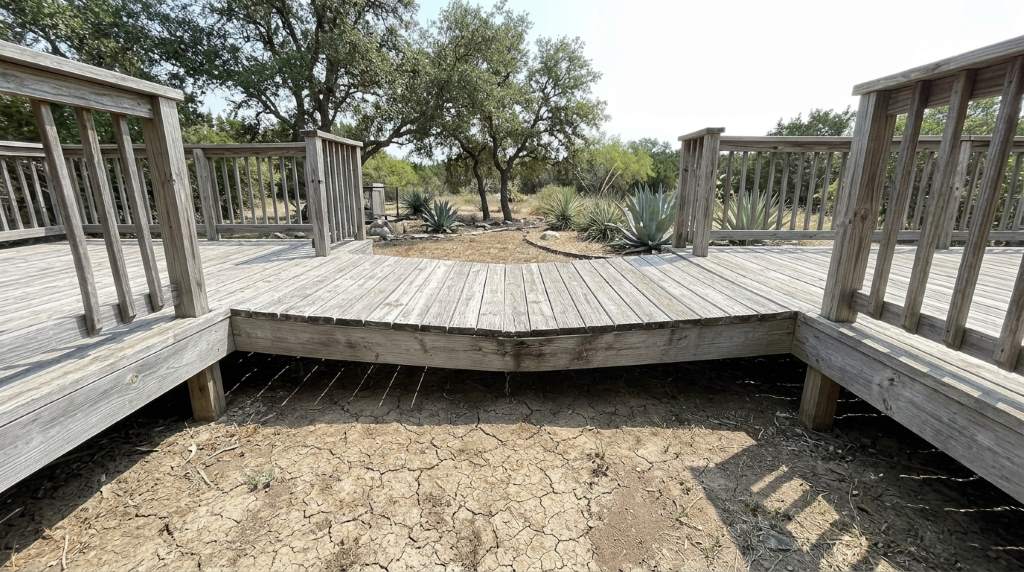
Yes, you can fix sagging decking in Austin, TX, when the damage remains limited to boards or accessible framing. Start by finding the structural cause, then repair the affected joists, beams, posts, or fasteners before replacing the surface. Austin receives about 35.5 inches of rain annually, while intense summer heat accelerates moisture-related movement and wood deterioration. Consequently, proper drainage and ventilation matter, much like low slope roof water drainage matters for preventing repeated moisture exposure.
Key Takeaways
- Identify whether boards, joists, beams, posts, footings, or connections cause the sag.
- Never level a deck permanently without correcting the structural problem underneath.
- Replace rotten lumber rather than covering damaged framing with new boards.
- Check ledger connections, flashing, fasteners, and post bases for moisture damage.
- Use temporary supports carefully before removing structural deck components.
- Check Austin permit requirements before structural repairs or major deck reconstruction.
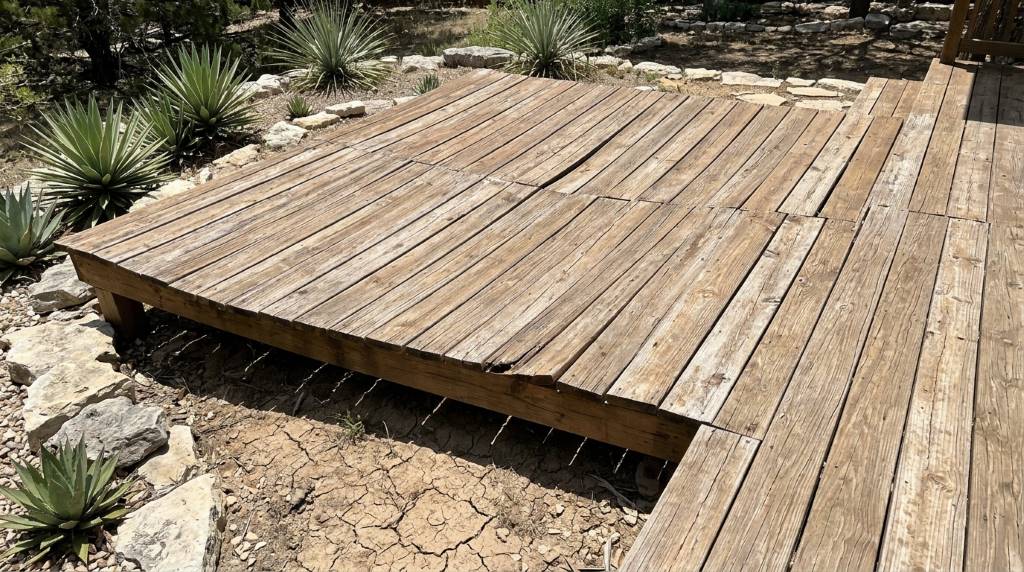
Start With a Structural Deck Inspection
A sagging deck rarely develops without a reason, so begin by inspecting the entire structure. Walk slowly across the deck and identify soft boards, uneven areas, loose fasteners, and noticeable movement. Next, examine the underside because framing problems often remain invisible from above. Look for cracked joists, twisted beams, leaning posts, split lumber, rusted connectors, and water-damaged wood.
Pay particular attention to areas near the house because the ledger carries significant structural loads. A failed ledger connection can allow part of the deck to settle, pull away, or move unexpectedly. Therefore, never treat a large slope as a simple cosmetic defect. If you need broader structural context, these considerations when repairing provide a useful reminder about evaluating underlying construction before surface repairs.
Use a long level or laser level to measure the deck surface at several points. Compare the deck elevation near the house with the outer beam and then compare different joist lines. This approach helps you determine whether the entire structure slopes or only one section has dropped.
Check for Movement Before Removing Anything
Stand away from the deck and watch its edges while another person walks across it. Excessive bouncing can indicate undersized framing, damaged connections, weak support posts, or deteriorated structural members. Likewise, movement around the ledger deserves immediate attention because connection failure can create serious safety risks.
Do not rely on new screws to solve movement caused by damaged framing. Screws can secure sound boards, but they cannot restore the strength of rotten joists or failing beams. Instead, identify the member that has lost its capacity and repair that component first.
Find the Most Common Causes of Sagging Decking
Several conditions can make decking appear lower than it should, and each requires a different repair. In Austin, repeated moisture exposure, intense sunlight, temperature changes, soil movement, and aging fasteners can gradually affect deck performance. Consequently, diagnosis should come before purchasing replacement lumber.
- Rotten joists: Moisture can weaken joists until they can no longer maintain the deck’s original elevation.
- Weak beams: A damaged or undersized beam can allow multiple joists to sag simultaneously.
- Settled posts: Soil movement or inadequate footing support can lower one side of the deck.
- Loose connections: Failed bolts, screws, hangers, and brackets can allow framing to shift.
- Damaged ledger: Water intrusion behind the ledger can weaken the connection to the house.
- Warped boards: Individual boards can cup or bow and create the appearance of uneven decking.
Inspect every area where water can remain trapped against wood. Pay special attention to board ends, joist tops, beam intersections, post bases, and the ledger connection. If you find widespread darkened, soft, or crumbly wood, assume the problem extends beyond the visible surface.
Look Below the Surface
Remove only enough decking to expose questionable framing when the boards conceal the suspected problem. Probe questionable wood gently with a screwdriver or awl to identify softened areas. However, do not use aggressive force because probing can damage otherwise serviceable lumber.
Also inspect drainage around the deck rather than focusing exclusively on the deck itself. Poor grading can keep soil and posts wet for extended periods, while clogged spaces can slow evaporation. Consequently, improving water movement can protect the replacement framing after the structural repair.
Repair Rotten or Sagging Joists
If one or more joists have sagged, determine whether the lumber remains structurally sound. Minor deformation may sometimes permit reinforcement, while extensive rot usually requires complete replacement. Never sister a new joist against severely deteriorated wood and assume the old member still contributes meaningful strength.
For a sound joist with limited damage, a properly sized sister member can reinforce the existing framing. The new member should extend sufficiently across the affected span and connect securely at supported locations. However, structural repairs should follow the applicable code and the deck’s original engineering requirements.
Use Temporary Support Before Structural Work
Never remove a load-bearing joist, beam, or post without supporting the deck first. Temporary shoring can prevent sudden movement while you remove damaged components. Position temporary supports on stable ground and distribute loads appropriately rather than placing concentrated pressure on weak soil.
Once the deck receives temporary support, remove damaged material carefully and inspect nearby connections. Replace compromised joist hangers, bolts, screws, or brackets when corrosion or damage affects their performance. Then install properly sized replacement lumber and verify the framing elevation before replacing the decking.
Do not force a severely sagging structure upward too quickly. Gradual correction can reduce the risk of cracking boards, shifting connections, or damaging attached portions of the house. For significant structural movement, a qualified deck professional should determine the safest correction method.
Correct Sagging Posts, Beams, and Footings
A deck that slopes across a broad area may have a support problem rather than a decking problem. Check whether posts remain plumb and whether beams sit consistently on their intended supports. Then inspect each footing for settlement, cracking, erosion, or inadequate bearing conditions.
Post settlement can make an otherwise healthy deck appear dramatically uneven. Raising the affected area without correcting its foundation can create another sag after the support moves again. Therefore, stabilize the footing or support system before restoring the final deck elevation.
For decks requiring substantial reconstruction, Austin’s current residential review process uses the 2024 International Residential Code with local amendments. The city’s technical checklist also addresses deck framing, connections, flashing, footings, guards, and structural requirements.
When a Beam Needs Replacement
Replace a beam when it has significant rot, splitting, crushing, excessive deflection, or connection failure. Do not conceal structural deterioration with decorative fascia because the damaged member remains responsible for carrying loads.
After installing a replacement beam, verify every joist connection and support point. A new beam cannot compensate for loose joists, damaged hangers, unstable posts, or inadequate footings. Consequently, treat beam replacement as part of a complete structural inspection.
Repair the Ledger and Improve Water Protection
The ledger deserves special attention because it connects an attached deck to the house. Water can enter around this connection and damage both the ledger and adjacent wall components. Therefore, inspect flashing, fasteners, wood condition, and the surrounding wall before deciding that new decking will solve the problem.
If the ledger shows deterioration, remove enough material to determine how far the damage extends. Replace compromised components and restore proper flashing according to applicable construction requirements. These signs of roof damage also illustrate why slow moisture problems deserve attention before they become expensive structural failures.
Keep water from collecting where the deck meets the house. Maintain appropriate drainage paths and avoid creating pockets where wet leaves, soil, or debris can remain against structural lumber. Additionally, inspect the ledger after major storms or whenever new staining appears indoors near the deck connection.
Replace Damaged Deck Boards Correctly
Once the framing remains sound, address the surface boards. Remove boards that have severe cracks, rot, excessive cupping, or dangerous movement. Keep reusable boards only when they remain structurally sound and maintain adequate fastening capacity.
Install replacement boards with appropriate spacing for drainage and seasonal movement. Follow the decking manufacturer’s fastening recommendations because composite and wood products can require different installation methods. Keep board ends supported and avoid creating unsupported joints between framing members.
Use corrosion-resistant fasteners suitable for the decking material and local exposure conditions. Austin’s heat and moisture cycles can accelerate fastener deterioration when unsuitable hardware remains exposed. Therefore, replacing damaged boards without upgrading failed fasteners can leave the deck vulnerable to another repair cycle.
Preserve Drainage Around the Deck
Good drainage protects repaired framing by reducing prolonged moisture exposure. Clear leaves and debris from gaps between boards, especially after heavy storms. Also keep vegetation from blocking airflow beneath the deck.
Check the ground beneath the deck after rainfall and look for standing water near posts. If water repeatedly remains around a footing, correct the drainage condition before installing new lumber. A structurally strong deck still deteriorates quickly when its support system stays wet.
Level the Deck Without Creating New Problems
After structural repairs, check the deck elevation again with a laser level or long level. Measure several locations instead of checking only the visibly lowest area. This process confirms whether the correction produced a consistent surface.
Do not chase perfect visual flatness when the deck design requires intentional drainage. Exterior surfaces need sensible water movement rather than a completely level plane. The goal involves restoring structural stability, safe walking surfaces, proper drainage, and reliable connections.
Also inspect stairs and railings after correcting deck elevation. Raising or lowering the deck can change stair geometry, railing heights, transitions, and attachment points. Consequently, structural repairs may require additional adjustments to keep the entire deck safe and code-compliant.
Know When Austin Permits May Apply
Austin distinguishes between certain minor repairs and larger structural projects, so check the city’s current requirements before starting work. The city currently exempts some non-structural exterior deck repairs limited to existing deck boards and without guardrails or handrails. However, broader deck construction, replacement, or structural work can require an application or review.
For example, Austin identifies a pool or uncovered deck application for residential deck construction, replacement, or repair. The city also states that exempt work must still comply with applicable building codes and other ordinances. Therefore, do not interpret permit exemption as permission to ignore structural requirements.
Floodplain properties deserve additional attention because special requirements can apply to repairs. Before major work, verify whether the property falls within a regulated flood hazard area. Austin advises property owners to document damage and discuss repairs with the appropriate floodplain office when applicable.
Questions to Check Before Work
- Is the deck attached? Attached decks can involve more complex structural connections and permitting considerations.
- Does the repair affect framing? Structural work deserves greater scrutiny than simple board replacement.
- Are guardrails involved? Replacing or modifying guards can change the project’s scope.
- Is the property in a floodplain? Floodplain conditions can introduce additional requirements.
- Will the deck change size or elevation? Larger modifications can trigger additional review.
Choose Materials That Handle Austin Conditions
Material selection can determine how long your repair remains effective. Pressure-treated lumber offers a familiar option, while naturally durable species and composite decking can provide different maintenance profiles. However, every material still needs proper framing, fastening, drainage, and installation.
Do not assume composite boards can compensate for weak framing. Composite decking can improve surface durability, but the supporting joists, beams, posts, and connections still carry the structural loads. Therefore, repair the skeleton before investing in a premium surface.
Likewise, choose fasteners and connectors compatible with the lumber and environmental exposure. Keep water from collecting around penetrations, and follow manufacturer installation requirements. If you enjoy tracking outdoor projects or activity, you can also compare fitness rings features for general outdoor tracking, although that choice has no bearing on deck structural performance.
Prevent the Deck From Sagging Again
Prevention starts with regular visual inspections rather than waiting for another soft board. Walk the deck periodically and watch for new movement, staining, cracking, loose fasteners, and changes in elevation. After major storms, inspect the underside because water-related damage often begins where moisture remains trapped.
Keep the deck clean and maintain airflow underneath it. Trim vegetation that blocks ventilation and remove leaves that collect against posts, joists, or the house connection. Additionally, keep sprinklers from repeatedly soaking structural wood.
Inspect fasteners and connectors for corrosion before they become visibly loose. Replace failed hardware with compatible products rather than driving larger screws into weakened wood. Most importantly, investigate recurring movement instead of repeatedly tightening surface fasteners.
A Simple Seasonal Inspection Routine
In spring, inspect the structure after heavy rain and winter temperature changes. During summer, watch for splitting, excessive checking, and movement caused by repeated heat exposure. Before fall storms, clear debris and confirm that water can move freely around the deck.
Keep a simple record of repairs, replaced boards, structural members, and recurring problem areas. This record helps identify patterns and makes future professional inspections more efficient. It also prevents homeowners from repeatedly repairing the same symptom without addressing its underlying cause.
When You Should Hire a Deck Professional
Professional help becomes appropriate when sagging involves beams, posts, footings, ledgers, stairs, or significant structural connections. Likewise, hire an experienced professional when the deck moves noticeably under normal use. Structural uncertainty creates unnecessary risk when the repair involves load-bearing components.
Consider professional evaluation when rot extends beyond isolated boards. Extensive deterioration can hide inside joist ends, beams, ledger connections, and post bases. A qualified professional can identify the actual failure path and develop a repair plan rather than treating individual symptoms.
Do not use a cosmetic deck repair to hide structural instability. Fresh boards can make a failing deck look attractive while leaving dangerous framing underneath. Instead, spend the repair budget on structural integrity first and appearance second.
Final Inspection Before Using the Deck
After completing repairs, inspect every structural connection and walking surface. Confirm that boards sit firmly, fasteners remain secure, railings feel solid, and stairs remain stable. Then check the deck from above and below for unexpected movement.
Walk across the entire deck slowly and observe areas that previously sagged. Compare those areas with your original measurements and confirm that the structure remains stable. If movement persists, stop using the affected section and reassess the underlying framing.
Finally, confirm that the repair satisfies applicable Austin requirements when permits or inspections apply. Austin’s residential technical requirements address deck framing, footings, connections, flashing, guards, and related structural details. Taking this final step helps protect both your household and your investment.
Conclusion: Fix the Cause, Not Just the Sag
Fixing sagging decking in Austin, TX, starts with identifying whether the problem involves boards, joists, beams, posts, footings, or connections. Once you locate the failure, repair the structure first and replace the surface afterward. This approach creates a safer deck and reduces the chance of repeating the same repair.
Because Austin combines significant annual rainfall with prolonged periods of intense heat, moisture management deserves long-term attention. Inspect drainage, maintain airflow, protect structural connections, and respond quickly to early signs of deterioration. If your deck shows major movement, widespread rot, or ledger problems, contact a qualified local deck professional before attempting structural repairs.
Frequently Asked Questions
Can I fix slightly sagging deck boards myself?
Yes, homeowners can often replace isolated damaged boards when the underlying framing remains sound and accessible.
Why does my deck sag after rain?
Persistent sagging after rain can indicate weakened wood, settled supports, poor drainage, or deteriorated structural connections.
Should I replace rotten deck boards or joists first?
Repair or replace compromised structural joists first because new surface boards cannot correct weakened framing.
Does Austin require a permit for deck repairs?
Some limited non-structural deck-board repairs may qualify for exemption, but structural or larger projects can require permitting.
When should I call a professional for a sagging deck?
Call a professional when sagging involves beams, posts, footings, ledgers, stairs, significant movement, or widespread wood deterioration.