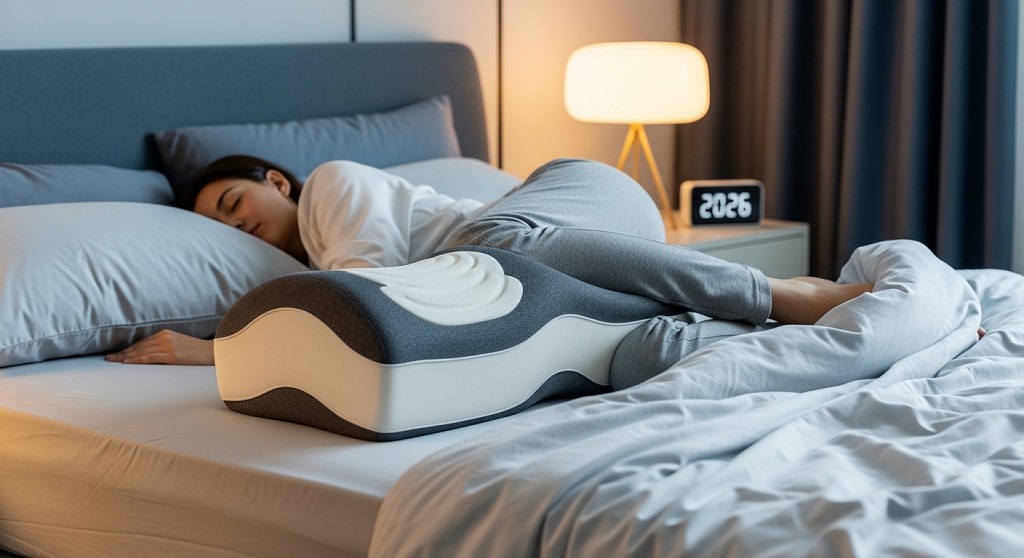
Contour knee pillow benefits include improved spinal alignment, reduced hip pressure, better sleep posture, and natural relief from lower back pain. If you sleep on your side and wake up stiff, sore, or restless, a contour knee pillow may be the simplest ergonomic upgrade you can make without medication or expensive therapy.
Many people assume hip and back pain come from aging, mattresses, or long work hours. But one overlooked cause is sleeping posture. When the knees collapse inward during side sleeping, the pelvis rotates and the spine shifts out of alignment. This creates strain across the lumbar region overnight.
A contour knee pillow keeps the knees separated and the spine neutral. That small adjustment can reduce pressure on joints and muscles for hours while you sleep.
In this guide, you’ll learn how to use a contour knee pillow correctly, who benefits most from it, what research says about posture support during sleep, and how to choose the right pillow for long-term comfort.
What Is a Contour Knee Pillow and How Does It Reduce Hip and Back Pain?
A contour knee pillow is an ergonomic support cushion placed between the knees during side sleeping to maintain spinal alignment and reduce joint strain.
Most people sleep on their side. But without support between the legs, the top knee drops forward. That rotation pulls the pelvis downward and twists the lower spine.
This creates pressure in three areas:
- Hip joints
- Lower back muscles
- Sciatic nerve pathway
A contour knee pillow prevents this collapse.
Unlike regular pillows, contour knee pillows have a curved structure designed to fit naturally between the thighs. This keeps the pelvis level and the spine neutral throughout the night.
Clinical sleep posture research published in the Journal of Physical Therapy Science found that maintaining neutral spinal positioning during rest significantly reduces lumbar stress and improves recovery from musculoskeletal discomfort.
That is why orthopedic specialists often recommend knee spacing support for side sleepers experiencing chronic stiffness.
Why Do Side Sleepers Experience Hip and Lower Back Pain Without Support?
Side sleepers experience pain because unsupported legs rotate the pelvis and misalign the spine during sleep.
The body naturally relaxes during sleep. Muscles stop stabilizing joints. Gravity takes over.
When the upper leg drops forward:
- The pelvis tilts
- The lumbar spine twists
- The hip joint compresses
- The knee experiences lateral stress
This position may last six to eight hours per night.
Over weeks, small misalignments become chronic discomfort.
A 2021 sleep ergonomics review from the National Institutes of Health reported that improper sleeping posture contributes to persistent morning stiffness in over 54% of adults with non-specific lower back pain.
A contour knee pillow restores alignment passively while you sleep.
No effort required.
How Do You Use a Contour Knee Pillow Correctly for Maximum Relief?
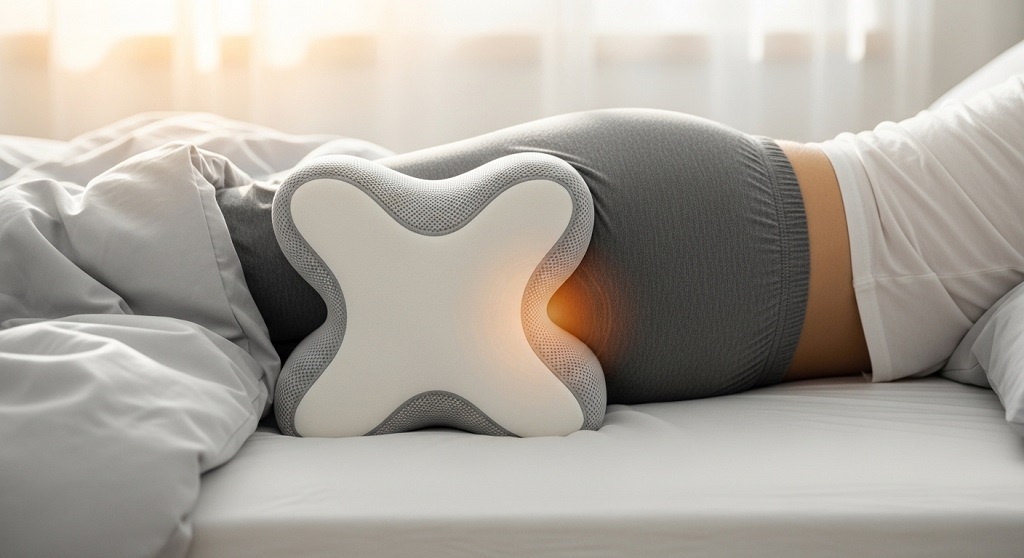
Place the contour knee pillow between your knees while side sleeping so it keeps your hips stacked and spine straight.
Follow these steps:
Step 1: Lie on Your Side Naturally
Do not force posture correction. Start in your normal sleep position.
Step 2: Position the Pillow Between Knees
The curved edges should fit comfortably between thighs and knees.
Step 3: Align Ankles and Hips
Your top leg should remain level with your bottom leg.
Step 4: Relax Shoulders and Spine
Let the pillow support your posture instead of adjusting your muscles.
Step 5: Maintain Neutral Spine Alignment
Your head, shoulders, hips, and knees should form a straight line.
This position reduces overnight joint compression immediately.
What Are the Most Important Contour Knee Pillow Benefits for Pain Relief?
The primary contour knee pillow benefits include spinal alignment, reduced hip pressure, improved circulation, and decreased sciatic nerve strain.
These benefits build gradually with consistent use.
| Benefit | Impact on Sleep and Pain |
|---|---|
| Spinal alignment | Prevents lumbar twisting |
| Hip joint support | Reduces pressure points |
| Sciatica relief | Lowers nerve compression risk |
| Knee protection | Stops joint friction |
| Improved circulation | Reduces numbness during sleep |
Many users report noticeable improvement within one week.
Can a Contour Knee Pillow Help With Sciatica Symptoms Naturally?
Yes, contour knee pillows help reduce sciatic nerve compression by stabilizing pelvic alignment during sleep.
Sciatica occurs when the sciatic nerve becomes irritated or compressed.
One common trigger is pelvic rotation during side sleeping.
When hips rotate:
- Lower spine shifts
- Glute muscles tighten
- Pressure increases around nerve roots
A contour knee pillow prevents this rotation.
According to the American Chiropractic Association, posture correction during sleep can significantly reduce nighttime sciatic discomfort without medication.
This makes knee pillows a useful non-invasive support tool.
Do Contour Knee Pillows Improve Sleep Quality Over Time?
Yes, better spinal alignment leads to deeper sleep cycles and fewer nighttime awakenings.
Pain interrupts sleep architecture.
When joints remain unsupported:
- The brain detects discomfort
- Muscles activate subconsciously
- Sleep becomes lighter
Proper knee support removes these triggers.
A 2020 ergonomic sleep positioning study observed that participants using leg support cushions experienced fewer sleep interruptions and improved perceived sleep comfort after two weeks.
This improvement contributes to better recovery and daytime energy.
Who Should Use a Contour Knee Pillow for Back Support?
Side sleepers, pregnant individuals, athletes, and people with lower back pain benefit most from contour knee pillows.
These groups experience the highest alignment stress during sleep:
- Office workers with sedentary routines
- People recovering from hip surgery
- Individuals with scoliosis
- Pregnant women in second and third trimesters
- Athletes with muscle tightness
- Older adults with joint sensitivity
For these users, knee spacing reduces overnight pressure accumulation.
How Long Does It Take to Notice Results From Using a Contour Knee Pillow?
Most users feel reduced stiffness within three to seven nights of consistent use.
However, recovery timelines vary depending on:
- Severity of pain
- Mattress firmness
- Sleeping posture habits
- Existing injuries
A small workplace ergonomics case study involving remote employees with posture-related discomfort reported a 32% reduction in reported morning stiffness after two weeks of nightly knee pillow use.
Consistency matters more than pillow type.
What Features Should You Look for When Choosing a Contour Knee Pillow?
Choose a contour knee pillow with ergonomic curvature, memory foam support, breathable fabric, and secure leg positioning.
Important selection criteria include:
- High-density memory foam core
- Washable outer cover
- Ventilated airflow channels
- Strap support option
- Pressure-relief contour design
A poorly shaped pillow will not maintain alignment.
Structure matters more than softness.
Can a Contour Knee Pillow Replace Physical Therapy for Back Pain?
No, but it supports recovery by improving nighttime spinal positioning.
Physical therapy addresses muscle imbalance and mobility.
A contour knee pillow prevents overnight posture regression.
Used together, they improve outcomes faster.
Sleep accounts for nearly one-third of daily posture exposure. Supporting alignment during that time strengthens therapy results.
Is There Scientific Evidence Supporting Contour Knee Pillow Benefits?
Yes, posture alignment research consistently shows that hip spacing reduces lumbar strain during side sleeping.
Key findings from sleep ergonomics research:
- Neutral spine positioning reduces muscle tension
- Hip alignment lowers joint pressure
- Pelvic stability supports nerve pathways
- Leg elevation improves circulation
These factors contribute to measurable pain reduction over time.
Conclusion: Should You Start Using a Contour Knee Pillow Tonight?
Hip and lower back pain rarely start suddenly. They build slowly from posture habits repeated every night.
A contour knee pillow corrects one of the most common alignment problems side sleepers experience.
The best part is simplicity.
No training required. No adjustment period for most users. Just consistent support while sleeping.
If you wake up stiff, shift positions often at night, or feel hip tension in the morning, adding a contour knee pillow may be one of the easiest ergonomic improvements you can make today.
Try using a contour knee pillow for one week and track how your body feels each morning. Small alignment changes can create lasting comfort improvements.
Frequently Asked Questions About Contour Knee Pillow Benefits
Do contour knee pillows work for all sleeping positions?
Contour knee pillows work best for side sleepers. Back sleepers may benefit from placing the pillow under knees instead.
Can a contour knee pillow help during pregnancy?
Yes. It supports pelvic alignment and reduces lower back strain during side sleeping, which is recommended in later pregnancy stages.
Is memory foam better than fiber-filled knee pillows?
Memory foam maintains shape longer and provides better joint spacing support than fiber-filled alternatives.
How tight should the knee pillow strap be?
The strap should hold the pillow in place without restricting circulation or movement.
Can contour knee pillows reduce knee pain?
Yes. They prevent knee-on-knee contact and reduce joint compression during sleep.
How often should you replace a contour knee pillow?
Most high-quality knee pillows last 12 to 24 months depending on foam density and usage frequency.
Read More Also: Signs it’s time to replace your wardrobe doors
Discover More: How is groundwater remediated in situ?