An essential home toolkit is a small collection of basic repair tools that help homeowners handle common household fixes such as tightening screws, hanging shelves, fixing leaks, assembling furniture, and repairing loose fittings without hiring a technician.
Most homeowners wait until something breaks before buying tools. That delay costs time, money, and often creates bigger problems. A loose hinge becomes a broken door. A leaking pipe becomes wall damage. A missing screwdriver turns a five-minute task into a service call.
According to a HomeAdvisor homeowner repair spending report, the average household spends hundreds of dollars yearly on minor repair visits that could be handled using simple tools already available at home. Many of those visits involve tasks like tightening fixtures, replacing handles, or assembling furniture.
This guide explains how to build a practical toolkit step by step. You will learn which tools matter, how to choose them, and how to store them properly. By the end, you will have a clear plan to create a reliable repair kit that supports everyday maintenance without overspending.
What Tools Should Be Included in an Essential Home Toolkit?
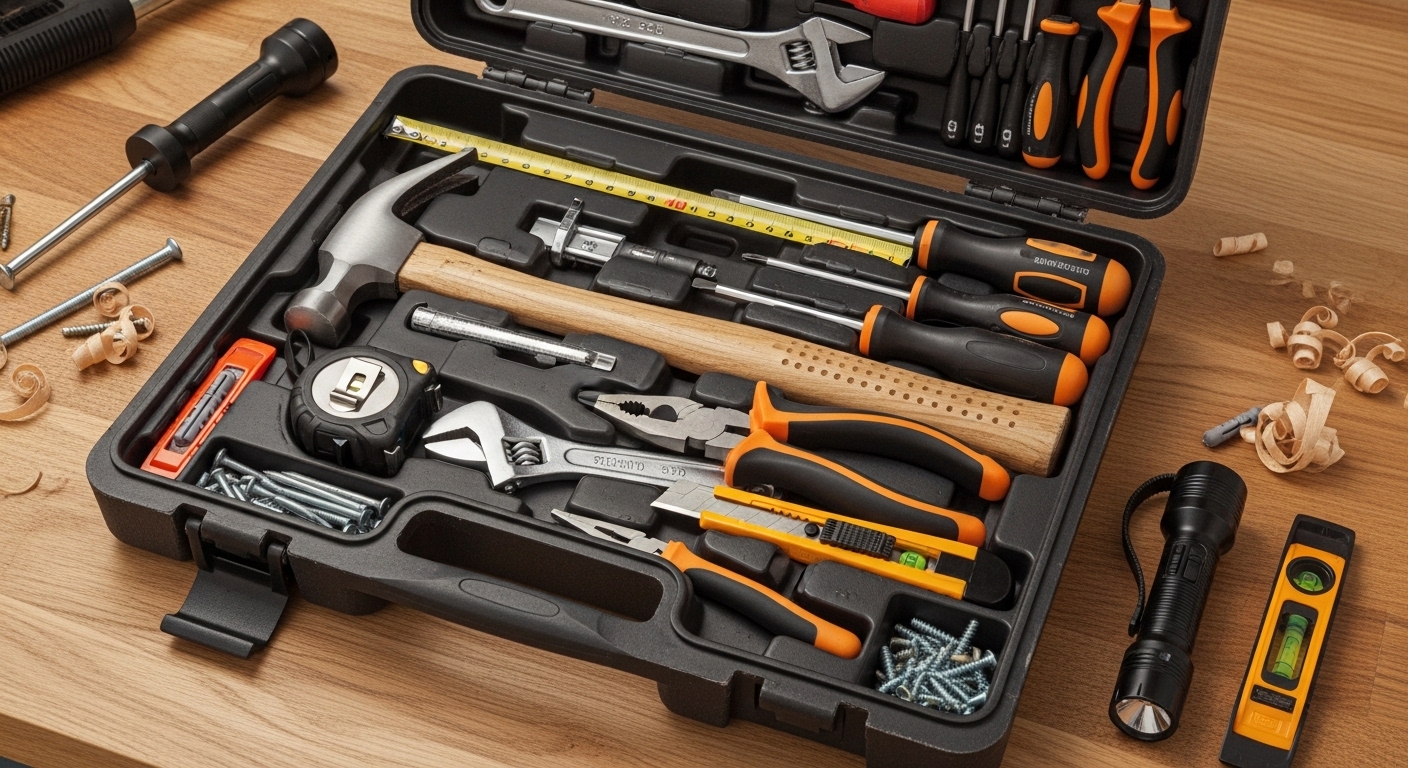
Short answer: A basic home toolkit should include a hammer, screwdriver set, adjustable wrench, pliers, measuring tape, utility knife, level, and drill.
These tools solve most common household repair problems. They also form the foundation of any beginner-friendly DIY repair setup.
Core Tools Every Household Needs
- Claw hammer for hanging frames and removing nails
- Flathead and Phillips screwdriver set
- Adjustable wrench for plumbing fittings
- Pliers for gripping wires and tightening parts
- Utility knife for cutting packaging and materials
- Measuring tape for furniture alignment
- Spirit level for straight installations
- Cordless drill for faster assembly
A Stanley Black & Decker consumer usage study found that over 65% of homeowners regularly use screwdrivers and measuring tapes more than any other tools. That makes them essential first purchases.
If your goal is everyday repair readiness, start here. Avoid buying advanced tools early. They often remain unused.
Why Do Homeowners Need an Essential Home Toolkit for Everyday Repairs?
Short answer: A home toolkit saves money, reduces repair delays, and helps prevent small issues from becoming expensive structural problems.
Many repairs begin as minor maintenance tasks. Tightening screws. Adjusting cabinet doors. Replacing wall hooks. Without tools, these jobs are ignored.
Over time, ignored maintenance leads to bigger repair costs.
A Joint Center for Housing Studies of Harvard University report shows homeowners who perform preventive maintenance spend significantly less on emergency repairs over time compared to reactive households.
Key Benefits of Owning a Basic Repair Tool Kit
- Reduces service call expenses
- Saves time during urgent fixes
- Improves home safety
- Supports furniture installation
- Helps with quick plumbing adjustments
- Encourages DIY confidence
Even renters benefit from keeping a small toolkit.
How Can Beginners Build an Essential Home Toolkit Step by Step?
Short answer: Start with must-have hand tools, add measuring tools next, then include safety gear and power tools gradually.
Building a toolkit does not require buying everything at once. A staged approach keeps costs manageable.
Step 1: Buy Basic Hand Tools First
- Hammer
- Screwdriver set
- Pliers
- Adjustable wrench
These tools solve over half of common home repair tasks.
Step 2: Add Measuring and Alignment Tools
- Measuring tape
- Spirit level
- Marker pencil
Accurate placement prevents installation mistakes.
Step 3: Add Cutting and Fastening Tools
- Utility knife
- Allen key set
- Nail assortment
- Wall anchors
Step 4: Add a Cordless Drill
A drill increases efficiency when assembling furniture or mounting shelves.
Consumer Reports testing shows cordless drills reduce installation time by more than 40% compared to manual screwdrivers.
What Safety Items Should Be Included in a Home Repair Toolkit?
Short answer: Include gloves, safety glasses, a flashlight, and electrical tape.
Safety equipment prevents common repair injuries such as cuts and eye strain.
Essential Safety Accessories
- Protective gloves
- Safety goggles
- Flashlight or headlamp
- Electrical insulation tape
- Dust mask
Small protection tools make a large difference during repair work.
How Much Does It Cost to Build an Essential Home Toolkit?
Short answer: A reliable starter toolkit typically costs between $40 and $120 depending on quality and included tools.
Buying tools individually often costs more than purchasing bundled starter kits.
| Toolkit Level | Estimated Cost | Best For |
|---|---|---|
| Basic | $40–$60 | Renters and students |
| Standard | $60–$90 | Homeowners |
| Advanced | $90–$120 | Frequent DIY users |
Investing once prevents repeated repair service payments later.
Which Optional Tools Improve a Basic Household Toolkit?
Short answer: Add a stud finder, adjustable spanner set, hex keys, and a voltage tester for expanded repair capability.
Optional tools increase efficiency during medium-level home projects.
Recommended Upgrade Tools
- Stud finder for wall mounting accuracy
- Voltage tester for electrical safety
- Socket wrench set
- Caulking gun for sealing gaps
- Multi-bit screwdriver
These tools support repairs beyond daily maintenance tasks.
How Should You Store an Essential Home Toolkit for Easy Access?
Short answer: Store tools inside a labeled toolbox placed in a dry, accessible location.
Good storage prevents rust, tool loss, and clutter.
Smart Storage Tips
- Use compartment toolboxes
- Label small hardware sections
- Keep tools away from moisture
- Store frequently used tools on top
Organized storage improves repair efficiency.
How Does an Essential Home Toolkit Support Long-Term Home Maintenance?
Short answer: A toolkit enables routine inspections, early repairs, and preventive maintenance that extend the life of fixtures and furniture.
Routine maintenance reduces replacement costs.
A National Association of Home Builders lifecycle report shows properly maintained fixtures last significantly longer than neglected ones.
- Cabinet hinges last longer when tightened regularly
- Wall fixtures stay secure with periodic checks
- Furniture remains stable with proper fasteners
Preventive maintenance protects your home investment.
Conclusion: How Can You Start Building Your Essential Home Toolkit Today?
An essential home toolkit is not a luxury purchase. It is a practical household necessity that supports daily repairs, reduces maintenance costs, and improves safety inside your home.
Most homeowners delay building a toolkit because they assume it requires technical knowledge. That is not true. A simple starter set handles most everyday repairs.
Start with the eight core tools listed in this guide. Add safety equipment next. Upgrade gradually based on your needs.
The earlier you build your toolkit, the more confident and independent you become when handling home maintenance tasks.
Take action today. Create your starter toolkit checklist and begin assembling the tools that make everyday repairs faster and easier.
FAQs About Essential Home Toolkits
What is the most important tool in a home toolkit?
A screwdriver set is the most frequently used tool in household repairs because it helps assemble furniture, tighten fixtures, and adjust hardware.
Is a cordless drill necessary for beginners?
A cordless drill is not required initially but becomes useful when installing shelves, mounting fixtures, or assembling furniture faster.
How often should tools be replaced?
High-quality tools can last many years. Replace them only when they show damage, rust, or reduced performance.
Can renters benefit from a home toolkit?
Yes. Renters often handle furniture assembly, wall hooks, curtain rods, and small adjustments independently using basic tools.
Should I buy a toolkit set or individual tools?
Starter toolkit sets are usually more cost-effective than purchasing individual tools separately.
Where should I keep my home toolkit?
Store tools inside a toolbox placed in a dry and easily accessible area such as a closet shelf or utility cabinet.
Read How is groundwater remediated in situ
Learn How to Clean and Maintain a Waterproof Dog Bed Properly