Are you struggling with murky water, algae blooms, or foul odors in your saltwater aquarium? Maintaining pristine water quality can feel overwhelming, but a protein skimmer is a secret weapon many reef keepers rely on. In this article, you’ll discover exactly how protein skimmers work in saltwater aquariums, with a simple explanation even beginners will understand.
Snippet Answer: Protein skimmers remove organic waste from saltwater aquariums by generating tiny bubbles that attract and collect dissolved proteins and organics, forming foam that’s then expelled from the system. This helps maintain cleaner water, healthier fish, and a thriving tank.
What is a protein skimmer and why is it needed in saltwater aquariums?
A protein skimmer is a filtration device designed to remove organic compounds from saltwater aquariums. It is essential because it prevents excess waste buildup, which can lead to harmful ammonia, nitrite, and algae problems in marine environments.
Saltwater aquariums are closed systems, meaning waste accumulates much faster than in nature. Uneaten food, fish waste, and decaying organic matter quickly break down into dissolved organics. Toxic compounds like ammonia and nitrite can spike, endangering your prized marine life. Nuisance algae thrive on these nutrients, turning your aquarium into a green, unhealthy mess. Chemical filter media and water changes help, but they often aren’t enough.
This is where protein skimmers come in. They specifically target dissolved organics that traditional filters miss, reducing the need for frequent water changes and allowing your aquarium’s natural biofilter to flourish. A good skimmer means cleaner water, healthier fish, and beautiful coral growth.
How do protein skimmers actually work to clean aquarium water?
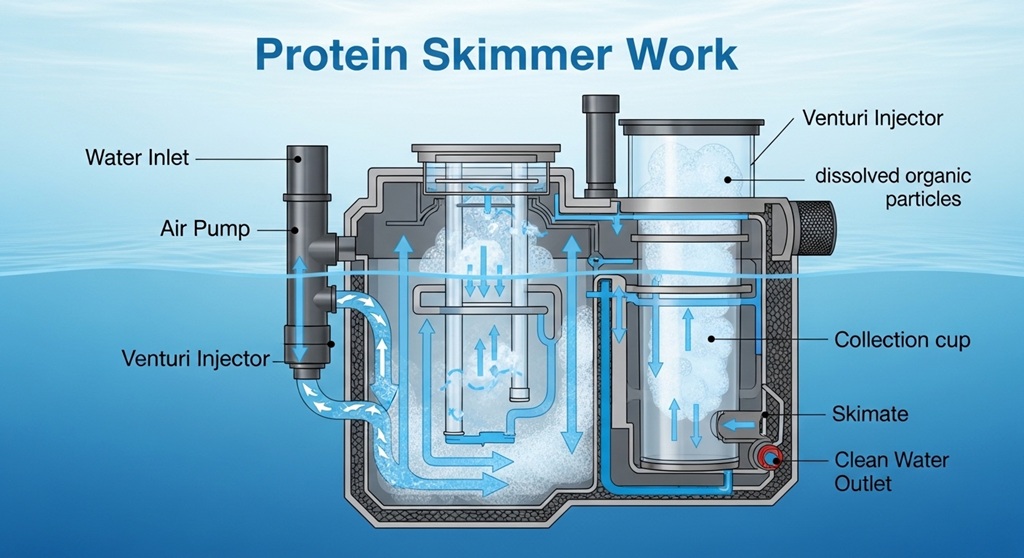
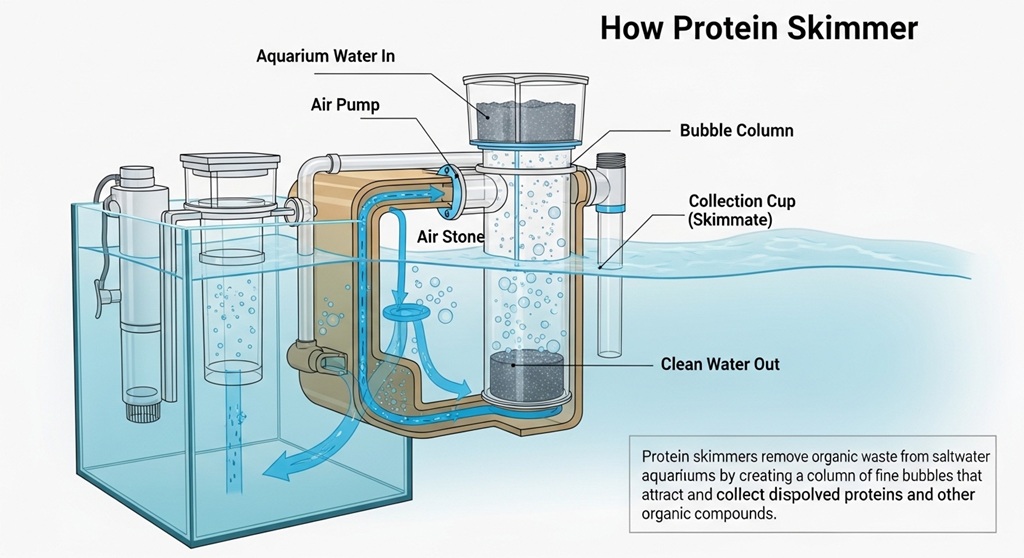
Protein skimmers use a process called foam fractionation. They inject fine air bubbles into a column of water; organic waste molecules stick to the bubbles, rise to the surface, and are collected as foam, which is removed from the aquarium.
The science here is surface tension. Proteins and other organic molecules are attracted to the air-water interface. When millions of tiny bubbles are produced in the skimmer’s reaction chamber, they provide an immense surface area for these organics to cling to.
- Water from the aquarium enters the skimmer.
- An air pump or venturi injects fine bubbles.
- Dissolved organics adhere to the bubbles’ surfaces.
- Bubbles rise, carrying organics with them.
- Foam accumulates in the skimmer cup and is removed.
This “protein-rich” foam is literally skimmed off, so your tank is constantly purged of waste before it turns into harmful compounds. That’s the secret of how protein skimmers work so efficiently!
Which types of protein skimmers are available for saltwater tanks?
There are three main types of protein skimmers for saltwater aquariums: Hang-On-Back (HOB), in-sump, and external (external recirculating) models. Each suits different tank sizes, setups, and budgets.
- Hang-On-Back (HOB) Skimmers: Attach to the back of the tank, perfect for small to mid-sized setups and those without sumps.
- In-Sump Skimmers: Placed inside the sump filtration area, ideal for larger tanks with sump systems; usually more powerful.
- External Skimmers: Stand outside the sump or tank; best for very large aquariums or custom setups where space is an issue.
What is the difference between a protein skimmer and other aquarium filters?
Unlike mechanical or biological filters that trap particles or break down waste, protein skimmers specifically remove dissolved organic compounds before they degrade, making them uniquely suited for saltwater aquarium maintenance.
| Filter Type | Main Function | Removes Dissolved Organics? | Best for Saltwater? |
|---|---|---|---|
| Protein Skimmer | Foam fractionation of dissolved organics | Yes | Essential |
| Mechanical Filter | Captures physical debris | No | Helpful |
| Biological Filter | Breaks down ammonia/nitrite | No | Essential |
| Chemical Filter (e.g., carbon) | Absorbs toxins/odor | Partial | Optional |
Protein skimming removes threats before they even become a problem—which is why it’s so valuable for marine tanks.
How do you choose the right protein skimmer for your aquarium?
Choose a protein skimmer based on your tank size, bio-load, and system layout. Always select a model rated for a slightly larger tank than yours to ensure adequate waste removal and future-proofing.
If your aquarium is heavily stocked with fish or invertebrates, you’ll need a more powerful skimmer. For small tanks or those without a sump, a HOB skimmer works well. In reef tanks with sumps, an in-sump skimmer offers the best performance. Check for ease of maintenance, reliability, and noise levels.
- Calculate your actual tank water volume (including sump).
- Match or exceed skimmer ratings for your system’s size and load.
- Consider energy usage and pump quality.
- Read reviews for durability and support.
Investing in a quality protein skimmer pays you back with clearer water and healthier livestock.
How often does a protein skimmer need maintenance, and what’s involved?
Clean the collection cup and neck 1-2 times per week, and inspect the body, pump, and air intake monthly. Proper maintenance keeps a protein skimmer highly effective and prevents performance loss.
Over time, the neck of the skimmer becomes coated in waste, reducing foam efficiency. Simply remove the collection cup, rinse with freshwater (no soap), and use a brush on hard buildup. Every few months, disassemble the skimmer, soak components in vinegar to dissolve calcium and debris, and inspect the pump impeller for wear or clogging.
Consistent cleaning ensures your skimmer works like new and maximizes its life span. Skipping maintenance can result in a dramatic drop in performance or even overflow accidents.
What are the key benefits of using a protein skimmer in a saltwater aquarium?
Protein skimmers help maintain low nutrient levels, prevent nuisance algae, reduce the need for water changes, and improve oxygenation—all of which contribute to a thriving, stable saltwater aquarium.
Beyond the obvious water clarity, protein skimmers:
- Reduce dissolved organics, preventing toxic ammonia and nitrite spikes.
- Limit nuisance algae by depriving it of nutrients.
- Increase oxygen levels, which benefits corals and fish.
- Make water changes less frequent and easier.
- Enhance light penetration for coral growth.
- Improve livestock health and coloration.
Simply put, your saltwater system will run more smoothly and require less emergency intervention!
Can a saltwater aquarium succeed without a protein skimmer?
Yes, some hobbyists run saltwater tanks without skimmers, but it requires more frequent water changes, strict feeding habits, and careful stocking. Most reef tanks perform best with a protein skimmer for stability and ease.
Skimmerless aquariums can succeed with light stocking, lots of live rock, and diligent manual maintenance. However, the margin for error is much slimmer. Without a skimmer, organics accumulate faster, and water chemistry can swing unpredictably—making advanced coral care riskier.
For beginners and reef keepers who want peace of mind, a protein skimmer is the simplest, most effective choice.
What are the most common mistakes when using a protein skimmer?
New aquarists often buy undersized skimmers, neglect regular cleaning, or adjust settings incorrectly, resulting in poor performance and water issues. Avoid these by researching, sizing up, and following maintenance schedules.
Mistakes can include:
- Choosing a cheap or undersized model.
- Failing to clean the collection cup and neck regularly.
- Improperly adjusting water and air flow, reducing foam production.
- Placing the skimmer in fluctuating water levels (in sumps).
- Ignoring manufacturer’s instructions or advice.
Learning how protein skimmers work—and how to care for them—prevents frustration and keeps your tank thriving.
Frequently Asked Questions
How do I know if my protein skimmer is working correctly?
You should see consistent foam production and collection of dark, smelly “skimmate” in the cup. If the foam is watery or overflowing, or if nothing collects at all, adjustments may be needed.
Can a protein skimmer be run 24/7?
Yes, most aquarists run their protein skimmers 24/7 for optimal waste removal. Some only run them at night for pH stability, but full-time use is recommended for most saltwater tanks.
Should I use a protein skimmer during cycling?
It’s generally safe to run a skimmer during the cycling process. It won’t interfere with beneficial bacteria, but it may reduce cycling odors and remove excess proteins introduced during setup.
Why is my skimmer suddenly overflowing?
Overflowing can be caused by water level changes, overfeeding, chemical additives, or recent cleaning. Readjust the settings and allow 24 hours for the skimmer to settle. Avoid using water conditioners or medications near the skimmer.
Does a freshwater aquarium need a protein skimmer?
No, protein skimmers are not effective in freshwater due to the different surface tension properties. They are specifically designed for saltwater systems, where dissolved proteins are more easily removed.
Are protein skimmers noisy?
Modern protein skimmers are quieter than older models, but some noise is normal due to pumps and bubbling. Choosing a high-quality, well-maintained unit reduces operational noise. Skimmer placement also affects noise levels.
What should skimmate look like in a functioning skimmer?
Skimmate should be dark brown or black, thick, and foul-smelling—that’s the concentrated organic waste being removed. Clear, watery skimmate means the skimmer is producing “wet” foam and may need adjustment.
Conclusion: Should Every Saltwater Aquarium Use a Protein Skimmer?
If you want stable, healthy saltwater conditions with minimal hassles, a protein skimmer is essential. These devices target invisible waste, reduce harmful spikes, and boost your tank’s overall health. While it’s possible to run a tank without one, most aquarists find that a skimmer pays for itself in fewer water changes, happier livestock, and stunning clarity. Don’t leave water quality to chance—invest in a quality protein skimmer today and watch your reef thrive!
Ready to upgrade your aquarium? Share your questions in the comments or contact us for personalized skimmer recommendations!
Read More Also: How to Choose the Best Surfing Rash Guard for Maximum Comfort and Protection
Find out: Always follow these CNC router steps for safety