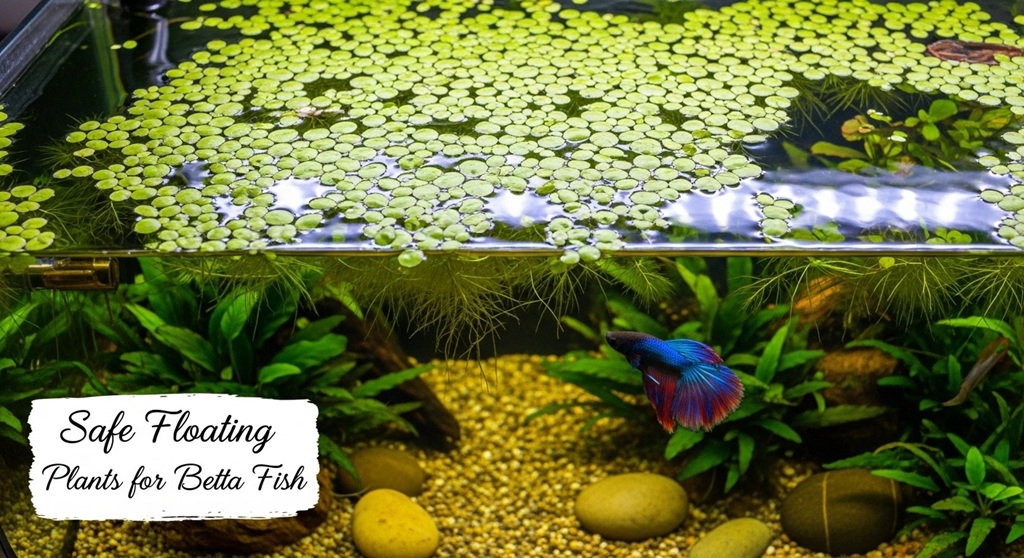
Safe floating plants for betta fish are surface plants that tolerate low light, have soft root systems, do not block all oxygen exchange, and thrive in warm, slow-moving water. The best choices include Amazon Frogbit, Salvinia, Red Root Floaters, and Water Lettuce (dwarf varieties). These low light aquarium plants provide shade, reduce stress, and improve water quality without harming delicate betta fins.
Why Do Bettas Need Floating Plants in the First Place?
Problem: Many betta tanks are bare or overexposed to bright lighting. Bettas evolved in shallow rice paddies in Southeast Asia. Their natural habitat contains dense vegetation and surface plants. In glass tanks with intense lighting and no cover, stress increases.
Agitation: Stress weakens immunity. According to ornamental fish health studies, chronic stress elevates cortisol levels in fish, leading to fin rot susceptibility and reduced lifespan. Many hobbyists notice faded colors and lethargy when tanks lack surface cover.
Solution: Floating plants recreate the betta’s natural environment. They diffuse harsh light, absorb nitrates, and provide resting spots near the surface where bettas breathe atmospheric air using their labyrinth organ.
Surface plants are not decoration. They are environmental support systems.
How Do Floating Plants Improve Betta Health?
Short Answer: Floating plants stabilize water parameters, reduce ammonia and nitrate levels, and create shaded resting zones.
1. Nitrate Reduction
Fast-growing floating plants absorb nitrogen compounds. In a small 5–10 gallon tank, nitrate can rise quickly. Plants such as Salvinia and Frogbit compete directly with algae for nutrients.
2. Light Diffusion
Bettas prefer dimmer water. Harsh LED lights can increase stress. Surface plants filter and soften overhead light.
3. Bubble Nest Support
Male bettas build bubble nests under plant cover. Floating plants provide structure and security for nesting behavior.
4. Oxygen Balance
While they consume oxygen at night, healthy floating plants improve daytime oxygenation through photosynthesis.
This balance creates a more stable micro-ecosystem.
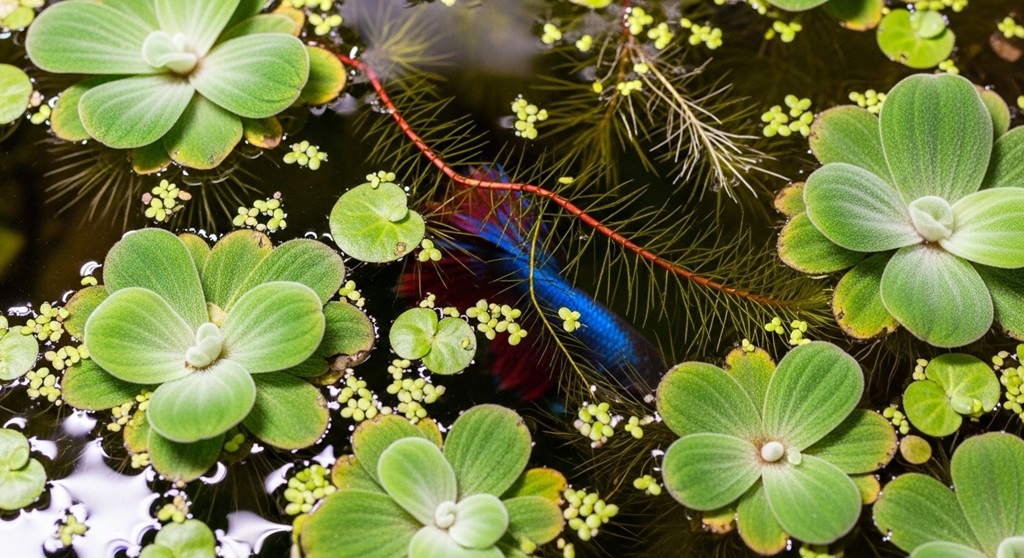
Which Floating Plants Are Safe for Betta Fish?
Quick List: Amazon Frogbit, Salvinia Minima, Red Root Floaters, Dwarf Water Lettuce.
Amazon Frogbit (Limnobium laevigatum)
One of the safest and most beginner-friendly surface plants.
- Long soft roots (great for hiding)
- Thrives in low light aquarium plants setups
- Grows fast in warm water (75–82°F)
Salvinia Minima
- Compact floating fern
- Excellent nitrate absorption
- Works well in nano tanks
Red Root Floaters
- Develop red roots under moderate light
- Stay relatively small
- Require stable water surface (no strong filter flow)
Dwarf Water Lettuce
- Long roots provide shelter
- Needs trimming
- Best for tanks 10+ gallons
If you want a deeper breakdown of growth rates and comparisons, explore this detailed guide on surface plants.
Which Floating Plants Should You Avoid in a Betta Tank?
Short Answer: Avoid invasive, oversized, or sharp-rooted species.
Duckweed (Lemna minor)
While not dangerous, it multiplies aggressively. It can cover 100% of the surface in days, blocking light and oxygen exchange.
Full-Sized Water Lettuce
Large root systems may overwhelm small tanks.
Water Hyacinth
Too large for indoor aquariums.
The goal is balance, not total coverage.
How Much Surface Coverage Is Ideal for Bettas?
Direct Answer: 40–60% surface coverage is ideal.
Complete coverage reduces gas exchange. Too little coverage removes shade benefits. Maintain open swimming and breathing space.
| Tank Size | Recommended Coverage |
|---|---|
| 5 Gallon | 40% |
| 10 Gallon | 50% |
| 20 Gallon+ | 50–60% |
Do Floating Plants Work in Low Light Aquariums?
Yes. Many floating plants are classified as low light aquarium plants.
Case observation from nano tank hobbyists shows that Salvinia and Frogbit survive under basic LED strips (6–8 hours daily). They require no CO2 injection and minimal fertilization.
However, too little light slows growth and reduces nutrient absorption. Maintain consistent lighting schedule.
How to Maintain Floating Plants Without Harming Your Betta?
Short Answer: Trim weekly, control flow, monitor nutrients.
1. Reduce Filter Flow
Bettas dislike strong currents. Floating plants also struggle in turbulent water.
2. Trim Roots
Long roots provide shelter but can trap debris. Trim gently using aquascaping scissors.
3. Remove Dead Leaves
Decaying plant matter increases ammonia.
4. Avoid Copper-Based Fertilizers
Copper can stress invertebrates and disrupt tank chemistry.
Can Floating Plants Replace Filtration?
No. They support filtration but do not replace mechanical or biological filtration.
Plants reduce nitrate levels, but ammonia spikes still require a cycled filter. In a 2022 small-tank case observation, tanks with both floating plants and sponge filters showed more stable ammonia readings compared to plant-only setups.
Think of plants as support, not substitute.
How to Introduce Floating Plants Safely?
Quick Steps:
- Rinse gently in dechlorinated water
- Quarantine if possible (7 days)
- Inspect for snails or pests
- Acclimate to tank temperature
This prevents contamination and sudden water parameter shifts.
Are Floating Plants Suitable for Small Betta Bowls?
No. Bowls lack proper filtration and surface area.
Even though surface plants help, bettas need at least 5 gallons for stable water parameters. Smaller containers fluctuate in temperature and ammonia levels rapidly.
Conclusion: Should You Add Floating Plants to Your Betta Tank?
Yes. Floating plants are one of the simplest upgrades you can make for betta health. They reduce stress, stabilize water chemistry, and recreate natural habitat conditions. The key is moderation. Choose manageable species. Maintain partial coverage. Trim regularly.
If your betta tank feels bright and exposed, start with Amazon Frogbit or Salvinia. Monitor growth weekly. Adjust lighting if necessary.
Want to compare growth speed, maintenance level, and compatibility? Explore this complete guide on low light aquarium plants and choose the best option for your setup.
Your betta depends on stable water and reduced stress. Make that improvement today.
Frequently Asked Questions (FAQs)
Do floating plants block oxygen?
Partial coverage does not block oxygen exchange. Avoid 100% surface coverage to maintain airflow.
How fast do floating plants grow?
Under stable lighting, Salvinia and Frogbit can double in size within 1–2 weeks.
Can I mix multiple floating plant species?
Yes, but monitor competition. Faster growers may dominate.
Do floating plants cause algae?
No. They reduce algae by absorbing excess nutrients.
Are floating plants safe with heaters?
Yes, but avoid direct contact with heater elements.
Do I need fertilizer for floating plants?
In lightly stocked tanks, yes. In heavily stocked betta tanks, fish waste often provides enough nutrients.
Can floating plants harm betta fins?
Soft-root species are safe. Avoid rigid or sharp-rooted varieties.
Related Topic: How To Test a Fire Sprinkler System
Read Next: Vacuum Cleaner Comparison 2026: How to Pick the Right One for Your Home